

 molly@surgitoolssh.com



How to Choose the Right Laparoscopic Scissors Manufacturer: A 5-Step Sourcing Guide
 Mar 05, 2026|
 View:620
Surgical teams performing minimally invasive procedures depend on precision instruments that meet exacting performance standards. Laparoscopic scissors represent critical tools in modern operating rooms, enabling surgeons to perform delicate tissue dissection and cutting maneuvers through small incisions. The quality of these instruments directly influences surgical outcomes, procedural efficiency, and patient safety. Selecting a dependable laparoscopic scissors manufacturer stands as one of the most important procurement decisions healthcare facilities make.
Finding the right supplier for surgical instruments can make or break a medical facility's operational efficiency and patient safety outcomes. When healthcare facilities source laparoscopic scissors, they're not just purchasing tools—they're investing in precision instruments that directly impact surgical success rates. Choosing a reliable laparoscopic scissors manufacturer requires careful evaluation across multiple factors including quality certifications, production capabilities, and service support. This comprehensive guide walks readers through five critical steps to identify manufacturers who deliver quality, reliability, and value.
Key Takeaways
Quality certifications like ISO 13485 and FDA approval serve as fundamental indicators of manufacturer reliability
Manufacturing experience specifically in laparoscopic scissors and minimally invasive surgical instruments matters more than general medical device production
Product testing documentation and quality control processes reveal true manufacturing standards
Customization capabilities and responsive customer service distinguish exceptional suppliers from average ones
Long-term partnership potential often outweighs initial price advantages
Step 1: Verify Essential Quality Certifications and Regulatory Compliance
The foundation of any reliable manufacturer relationship starts with regulatory compliance. Medical device manufacturers must demonstrate adherence to international quality standards that protect patient safety and ensure consistent product performance.
ISO 13485 certification represents the global benchmark for medical device quality management systems. This standard establishes comprehensive requirements for design, production, installation, and servicing of medical devices. According to the International Organization for Standardization, this certification emphasizes risk management and regulatory compliance throughout the product lifecycle.
Beyond ISO certification, manufacturers serving the United States market must comply with FDA regulations. The Quality Management System Regulation (QMSR), which became effective February 2, 2026, now incorporates ISO 13485:2016 by reference, harmonizing international and U.S. standards.
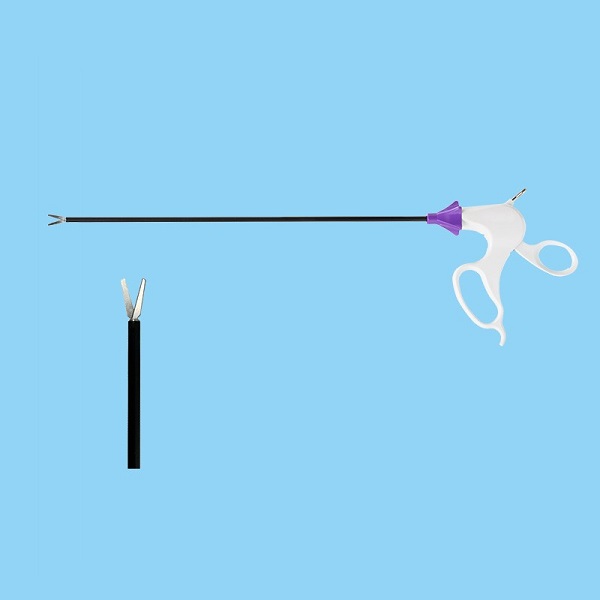
When evaluating potential manufacturers, request documentation proving:
Current ISO 13485 certification with valid expiration dates
FDA establishment registration numbers for U.S. market access
CE marking for European market compliance
Recent third-party audit reports demonstrating continued compliance
Manufacturers specializing in laparoscopic scissors typically maintain more rigorous quality control processes than general surgical instrument suppliers. Their focused expertise translates to better product performance and reliability in minimally invasive procedures.
Important Consideration:
Certifications alone don't guarantee quality. Verify that certificates are current, issued by accredited bodies, and cover the specific product categories relevant to laparoscopic scissors.
Step 2: Assess Manufacturing Experience and Technical Expertise
Years in business provide valuable context, but specialized experience in laparoscopic instruments carries more weight. Manufacturing precision laparoscopic scissors requires distinct technical capabilities compared to general medical device production.
Look for manufacturers who demonstrate:
Dedicated research and development teams focused on minimally invasive surgical instruments
In-house testing facilities equipped for performance validation and quality control
Engineering expertise in four-bar linkage mechanisms and precision cutting technologies
Material science knowledge regarding stainless steel grades and biocompatible coatings
Request information about the manufacturer's production capacity and scalability. A supplier with 10+ years of manufacturing experience and established production systems can better handle volume fluctuations and maintain consistent quality across large orders. Look specifically for expertise in producing curved laparoscopic scissors, straight laparoscopic scissors, and specialized variants like Metzenbaum-style laparoscopic scissors used for delicate tissue dissection.
| Experience Factor | Why It Matters | What to Look For |
|---|---|---|
| Industry tenure | Demonstrates market stability and proven track record | Minimum 5-10 years in laparoscopic instrument manufacturing |
| Product portfolio | Shows specialization depth and R&D investment | 100+ laparoscopic products across multiple categories |
| Client base | Indicates market acceptance and reliability | Established relationships with hospitals and distributors |
| Innovation capacity | Ensures access to latest technology advancements | Active patent portfolio and regular product updates |
Step 3: Evaluate Product Quality Through Testing and Documentation
Superior manufacturers don't just claim quality—they prove it through rigorous testing protocols and comprehensive documentation. Before committing to a laparoscopic scissors supplier, examine their quality assurance processes in detail.
Professional manufacturers maintain complete testing records for each product batch, including:
Mechanical performance testing (jaw strength, cutting precision, articulation smoothness)
Insulation integrity verification for electrosurgical models
Sterilization validation studies
Biocompatibility testing according to ISO 10993 standards
Dimensional accuracy measurements against design specifications
Request sample products to conduct independent evaluation. High-quality laparoscopic scissors should feature:
Smooth jaw operation with consistent cutting pressure throughout the stroke
Precise blade alignment ensuring clean cuts without tissue tearing
Ergonomic handle design reducing surgeon hand fatigue during extended procedures
360-degree rotation capability for enhanced maneuverability
Extended insulation preventing stray electrical currents in monopolar applications
Pro Tip:
Ask for samples from multiple production batches, not just showcase units. This reveals consistency in manufacturing quality across different production runs. Test both disposable laparoscopic scissors and any reusable models the manufacturer offers to understand their full capability range.
Step 4: Review Customization Options and Service Flexibility
Healthcare facilities have unique requirements based on surgical specialties, procedural volumes, and budget constraints. Laparoscopic scissors manufacturers offering customization capabilities provide significantly more value than those with rigid product catalogs.
Evaluate whether potential suppliers can accommodate:
Custom blade configurations for specific surgical applications (curved laparoscopic scissors for accessing tight spaces, straight designs for linear cutting)
Shaft length variations optimized for different patient populations
Handle modifications matching surgeon preferences and hand sizes
Private labeling for distributors building brand identity
Packaging options supporting different storage and sterilization workflows
Beyond product customization, assess service flexibility including:
Minimum order quantities that align with facility usage patterns
Production lead times fitting surgical schedule demands
Sample availability for surgeon evaluation before bulk purchases
Technical support for product selection and usage optimization
Responsive customer service with clear communication channels
Manufacturers who respond to inquiries within 48 hours and provide detailed product information demonstrate customer-focused operations. This responsiveness typically extends to order processing, problem resolution, and ongoing support.
Ready to Find Your Ideal Manufacturing Partner?
Selecting the right manufacturer requires careful evaluation across multiple criteria. Don't rush the decision—invest time in thorough research to establish a partnership that supports your facility's long-term success.
Looking for a reliable laparoscopic scissors manufacturer with proven quality standards? Consider Segimedical, a company with over 10 years of manufacturing experience, ISO 13485 and FDA certifications, and a comprehensive portfolio of 100+ minimally invasive surgical products. Their commitment to quality management and customer satisfaction makes them a trusted choice for healthcare facilities worldwide.
Step 5: Analyze Pricing Structure and Long-Term Value
While cost considerations influence every purchasing decision, focusing solely on the lowest price often leads to poor outcomes when sourcing laparoscopic scissors. Smart buyers evaluate total value rather than unit price alone.
Comprehensive cost analysis should include:
| Cost Factor | Considerations |
|---|---|
| Unit pricing | Compare prices across volume tiers and payment terms |
| Shipping costs | Evaluate freight options and delivery timeframes |
| Product longevity | Higher-quality instruments often provide better per-use economics |
| Warranty coverage | Protection against manufacturing defects reduces replacement costs |
| Reorder efficiency | Streamlined ordering processes save administrative time |
| Payment terms | Flexible payment options improve cash flow management |
Beware of pricing that seems too good to be true. Manufacturers cutting corners on quality control, materials, or regulatory compliance may offer lower prices initially but create significant risks and hidden costs down the line.
Request detailed quotations from multiple manufacturers to establish realistic price ranges. Look for transparency in pricing structures—reputable suppliers provide clear breakdowns of costs without hidden fees.
Consider negotiating long-term supply agreements that lock in favorable pricing while ensuring consistent product availability. Manufacturers value stable, predictable demand and often reward commitment with better terms.
Building Strong Manufacturer Relationships
The best supplier relationships extend beyond transactional purchases to strategic partnerships. Leading laparoscopic scissors manufacturers understand facility needs, anticipate challenges, and proactively offer solutions that deliver value beyond product specifications.
Strong partnerships are characterized by:
Regular communication about product developments and industry trends
Collaborative problem-solving when issues arise
Willingness to provide educational resources and clinical support
Transparency about manufacturing processes and supply chain status
Commitment to continuous improvement based on customer feedback
Schedule facility tours when possible to observe manufacturing operations firsthand. Manufacturers confident in their quality systems welcome such visits and use them to demonstrate their capabilities.
Conclusion
Selecting the right laparoscopic scissors manufacturer requires systematic evaluation across regulatory compliance, manufacturing expertise, product quality, service capabilities, and pricing structures. Healthcare facilities that invest time in thorough supplier assessment establish partnerships that enhance surgical outcomes, improve operational efficiency, and deliver long-term value. Whether purchasing disposable or reusable laparoscopic scissors, the selection criteria remain consistent.
The five-step framework outlined in this guide provides a structured approach to manufacturer evaluation. By prioritizing quality certifications, assessing technical capabilities, verifying product performance, evaluating service flexibility, and analyzing total value, purchasers can confidently identify suppliers who meet their exacting standards.
Remember that the lowest-priced option rarely proves the best choice over time. Focus instead on manufacturers demonstrating consistent quality, regulatory compliance, responsive service, and commitment to partnership success. These attributes separate exceptional laparoscopic scissors suppliers from those offering merely adequate products. The right manufacturer partnership ensures reliable access to high-performing laparoscopic scissors that support excellent surgical outcomes.
Frequently Asked Questions
What certifications should a laparoscopic scissors manufacturer have?
Reputable manufacturers should hold ISO 13485 certification for medical device quality management systems, FDA registration for U.S. market access, and CE marking for European compliance. These certifications demonstrate adherence to international quality and safety standards.
How can I verify a manufacturer's quality claims?
Request certification documentation, third-party audit reports, and product testing data. Order sample products for hands-on evaluation. Consider conducting factory visits or virtual facility tours to observe manufacturing processes and quality control procedures directly.
What's the typical minimum order quantity for laparoscopic scissors?
Minimum order quantities vary by manufacturer, typically ranging from 10 to 100 units per style. Some laparoscopic scissors manufacturers offer flexibility for initial trial orders, while others require higher volumes for custom configurations or private labeling.
How long does it take to receive orders from manufacturers?
Standard product lead times typically range from 2-6 weeks depending on order volume and product availability. Custom configurations may require 6-12 weeks for design, production, and quality verification. Rush orders may be accommodated with additional fees.
What warranty coverage should I expect?
Quality manufacturers typically offer warranties covering manufacturing defects for 6-12 months from delivery. Warranty terms should be clearly documented in purchase agreements, specifying replacement procedures and exclusions for normal wear or misuse.
Can manufacturers provide custom product specifications?
Established manufacturers often accommodate customization requests including blade configurations, shaft lengths, handle designs, and packaging options. Customization feasibility depends on order volume, with larger quantities justifying tooling and setup costs.
What support services should manufacturers offer?
Professional manufacturers provide technical consultation for product selection, educational resources about proper usage, responsive customer service for order management, and after-sales support for any product performance questions or concerns.
How do I evaluate pricing competitiveness?
Compare detailed quotations from at least three manufacturers, examining unit prices, volume discounts, shipping costs, payment terms, and warranty coverage. Consider total value including product quality and service support rather than focusing solely on lowest price.