

 molly@surgitoolssh.com



Characteristics and Important Applications of Laparoscopic Graspers
 Jun 09, 2026|
 View:439
Laparoscopic graspers are specialized instruments that help surgeons handle tissues safely during laparoscopic surgery. Their design often features smooth, arc-shaped jaws that reduce tissue trauma and support precise movements. Ergonomic handles and advanced mechanisms — such as a four-bar system and 360-degree rotation — give surgeons greater control and comfort. These characteristics matter in minimally invasive surgery, where accuracy and patient safety are critical. Understanding the different types and their unique applications helps surgical teams select the most effective tool for each procedure.
Laparoscopic graspers are essential tools in minimally invasive surgery, enabling safe tissue handling through small incisions.
Ergonomic handles with balanced weight distribution reduce hand fatigue during long procedures.
360-degree shaft rotation and a four-bar mechanism enhance control and precision.
Different grasper types — Maryland, alligator, and dolphin — serve specific functions based on tissue type and surgical needs.
Extended insulation and non-slip jaws protect both patients and surgical teams from injury.
Disposable graspers deliver consistent sterile performance, reducing infection risk.
Laparoscopic Graspers in Minimally Invasive Surgery
Definition and Function
Laparoscopic graspers are essential tools in minimally invasive surgery. These instruments mimic the movements of the human hand, allowing surgeons to grasp, hold, and manipulate tissues inside the body through small incisions. Their versatility makes them a cornerstone in laparoscopic surgery, where accuracy and gentle tissue handling are critical for patient safety.
Essential Components
Handle
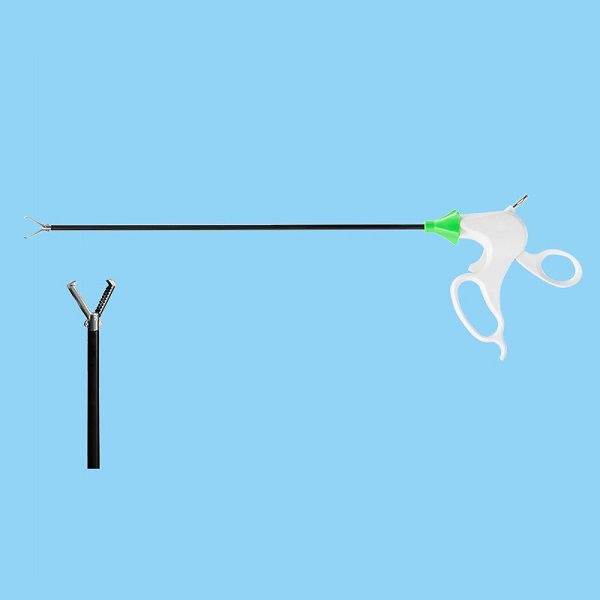
The handle is held by the surgeon and often features finger rings or an ergonomic grip for comfortable, controlled operation. Many handles include a ratchet locking mechanism that maintains grip on tissue without constant pressure, reducing hand fatigue during long procedures.
Shaft
The shaft is a long, slender rod connecting the handle to the jaws. It enables the instrument to reach deep into the body through a small port. Some shafts offer 360-degree rotation, giving surgeons flexibility to adjust the jaw angle for better tissue access.
Jaws (Tips)
The jaws are the working ends of the grasper. They come in various shapes and sizes — some with serrations or fenestrations to grip tissues securely without causing damage. Jaw design determines the instrument's suitability for specific tasks, from holding delicate organs to clamping blood vessels.
Insulation
Insulation covers the shaft and sometimes the jaws, protecting both patient and surgical team from stray electrical currents during energy-based procedures. Extended insulation is especially important for safety in laparoscopic surgery.
Role in Laparoscopic Surgery
Laparoscopic graspers support a wide range of tasks throughout minimally invasive procedures:
Grasping and fixing tissues — including tumors or organs — for precise operation
Controlling blood vessels to reduce bleeding
Assisting with suturing and ligation by holding tissues in place
Passing other instruments to the surgical area
Supporting and positioning organs during different surgical steps
Enhanced features such as ergonomic handles and haptic feedback improve the surgeon's ability to feel tissue resistance and apply the right amount of pressure, increasing both safety and patient outcomes.
Key Features of Laparoscopic Graspers
Ergonomic Design
Surgeons often perform procedures lasting several hours. Handle design plays a major role in comfort and control. Non-slip surfaces, balanced weight distribution, and ratchet mechanisms help maintain a steady grip and reduce hand fatigue. The Surgitools Disposable Laparoscopic Graspers feature an ergonomic handle with a green knob and ratchet for easy single-hand adjustment.
| Ergonomic Feature | Description | Benefit |
|---|---|---|
| Balanced Weight Distribution | Neutral center of gravity designed to feel weightless | Reduces muscular strain during long procedures |
| Non-Slip Handle Surface | Textured grip for secure hold even with wet gloves | Prevents slippage and hand cramps |
| Smooth Articulation | High-precision engineering minimizes actuation force | Saves energy, enables finer manipulation |
Four-Bar Mechanism
The four-bar mechanism is a key engineering feature in advanced laparoscopic graspers. It allows the jaws to open and close smoothly and evenly, providing precise force control when handling delicate tissues or small structures. The ratchet feature on the handle locks the jaws in place, eliminating the need for continuous squeezing and further reducing surgeon fatigue.
Safety Features
Extended insulation protects patients and the surgical team from stray electrical currents when energy devices are used intraoperatively. Non-slip jaws — some featuring tungsten carbide inserts — ensure a secure grip that prevents accidental tissue slippage or drops during critical moments.
360-Degree Rotation
A 360-degree rotation feature lets surgeons turn the grasper in any direction without removing the instrument from the body, reducing repositioning time and supporting more efficient surgical workflows. This is especially useful in complex procedures involving the gallbladder or appendix, where reaching difficult angles is essential.