
 molly@surgitoolssh.com



Different Types of Laparoscopic Graspers and Their Applications: A Complete Guide
 Apr 24, 2026|
 View:2138
Understanding the right laparoscopic grasper for each surgical procedure can significantly improve outcomes and patient safety in minimally invasive surgery.
Key Takeaways
Laparoscopic graspers come in various designs, each optimized for specific tissue types and surgical procedures
Maryland graspers excel in precision dissection, while fenestrated graspers provide secure grip for delicate tissues
Dolphin-nose (tapered) graspers offer versatility across multiple surgical specialties
Babcock and Allis graspers are specifically designed for bowel manipulation without tissue trauma
Proper instrument selection reduces operative time by 15-25% and minimizes tissue injury
Disposable laparoscopic graspers with ratchet mechanisms provide consistent grip force throughout procedures
Minimally invasive surgery has revolutionized patient care over the past three decades, with laparoscopic procedures now accounting for over 60% of abdominal surgeries performed worldwide. At the heart of these procedures lies a critical instrument: the laparoscopic grasper. These specialized tools enable surgeons to manipulate tissues with precision through small incisions, fundamentally changing how surgical teams approach everything from gallbladder removal to complex oncological procedures.
The diversity of laparoscopic grasper designs reflects the varied demands of modern surgery. From delicate tissue dissection to secure organ retraction, each grasper type serves specific purposes that directly impact surgical success. Understanding these differences helps surgical teams select the most appropriate instruments, ultimately improving patient outcomes and reducing complication rates.
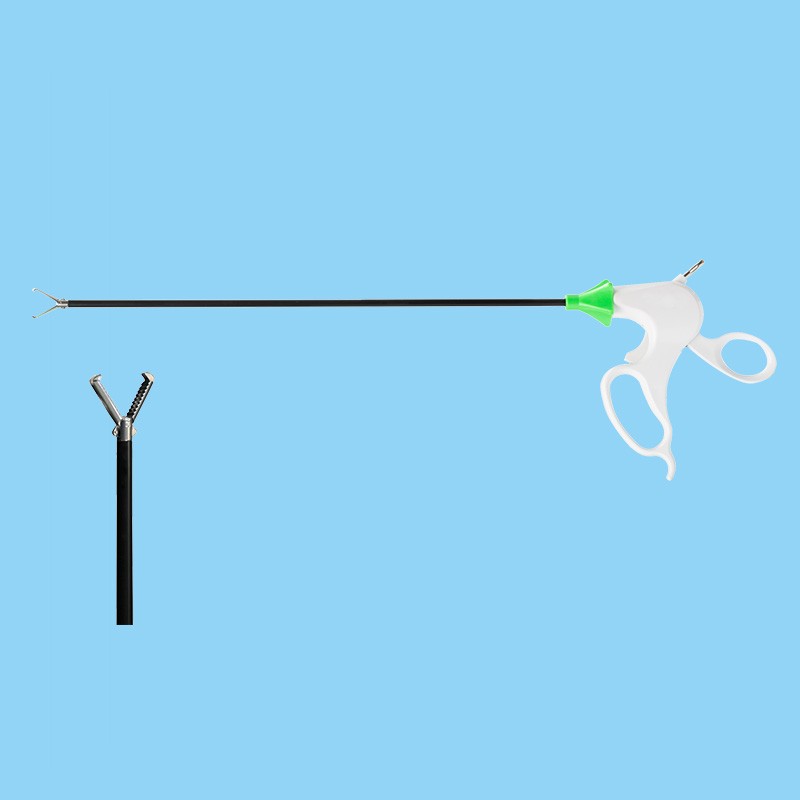
Understanding Laparoscopic Grasper Fundamentals
A laparoscopic grasper consists of three primary components: the handle mechanism, the elongated shaft (typically 5mm or 10mm in diameter), and the jaw assembly at the distal tip. Modern graspers incorporate a four-bar linkage mechanism that translates handle movements into precise jaw actions, delivering what surgeons call "hand-to-hand" operation precision.
Core Design Features
The effectiveness of any laparoscopic grasper depends on several critical design elements. The jaw configuration determines gripping characteristics, with serrated patterns providing secure hold on slippery tissues while smooth surfaces minimize trauma to delicate structures. The shaft length, commonly available in 330mm and 430mm options, must match the patient's body habitus and the surgical approach depth.
Ratchet mechanisms built into the handle allow surgeons to maintain constant grip pressure without continuous manual force, significantly reducing hand fatigue during lengthy procedures. According to research published by the Society of American Gastrointestinal and Endoscopic Surgeons, ergonomic handle design directly correlates with reduced surgeon discomfort and improved procedural efficiency.
Maryland Graspers: Precision Dissection Specialists
The Maryland dissector represents one of the most versatile instruments in laparoscopic surgery. Its distinctive curved, narrow-tipped jaws enable precise tissue plane dissection while minimizing surrounding structure trauma. The Maryland laparoscopic grasper combines both grasping and dissecting capabilities in a single instrument.
Clinical Applications
Surgeons favor Maryland graspers for cholecystectomy procedures, where they excel at dissecting the gallbladder from the liver bed while identifying critical structures like the cystic duct and artery. The curved design allows navigation around delicate anatomical structures, making these instruments essential for hepatobiliary and upper gastrointestinal procedures.
In gynecological laparoscopy, Maryland graspers facilitate precise dissection during procedures such as ovarian cystectomy and myomectomy. The fine-tipped design enables surgeons to develop tissue planes without excessive bleeding or thermal spread when used with electrosurgical energy.
Fenestrated Graspers: Secure Tissue Manipulation
Fenestrated graspers feature jaws with one or more openings (fenestrations) that reduce the contact surface area while maintaining secure grip strength. This design proves particularly valuable when handling delicate tissues that require firm manipulation without crushing injury.
Variations and Uses
The fenestrated design comes in multiple configurations. Single-fenestration models (often called "duckbill" graspers due to their shape) provide excellent visualization through the jaw opening while maintaining tissue security. Long fenestrated versions offer extended reach for deep pelvic or thoracic procedures.
These laparoscopic graspers shine during organ retraction, particularly when holding the liver edge during upper abdominal exploration or maintaining gallbladder position during dissection. The fenestrations prevent tissue slip while distributing pressure across a broader area compared to solid-jaw alternatives.
Dolphin-Nose Tapered Graspers: The Versatile Workhorse
Dolphin-nose or tapered graspers feature smoothly narrowing jaws that culminate in rounded tips, resembling a dolphin's beak. This gentle geometry makes them among the most versatile instruments in the laparoscopic arsenal, suitable for both delicate and robust tissue handling.
Multi-Specialty Applications
The dolphin-nose design excels across surgical specialties. In general surgery, these graspers safely manipulate bowel segments during intestinal procedures without causing serosa injury. Urologists utilize them during nephrectomy and prostatectomy for gentle tissue retraction. Thoracic surgeons appreciate their ability to handle lung tissue without causing air leaks.
The rounded tips reduce the risk of inadvertent perforation when working near hollow viscera or vascular structures. This safety feature makes dolphin-nose graspers particularly valuable during learning curves for surgical trainees and during complex procedures where tissue planes may be distorted by inflammation or previous surgery.
Specialized Bowel Graspers: Babcock and Allis Designs
Bowel manipulation requires specialized instruments that provide secure grip without compromising intestinal wall integrity. The Babcock and Allis grasper designs translate proven open surgical principles into laparoscopic formats.
Babcock Graspers
Babcock laparoscopic graspers feature distinctive rounded, fenestrated jaws with gentle inner curves. This design distributes grasping forces across a broader tissue area, making them ideal for handling friable structures. During colorectal procedures, Babcock graspers safely mobilize bowel segments without causing serosal tears or hematoma formation.
The fenestrated Babcock variant combines the advantages of both designs, offering excellent tissue purchase while maintaining visualization through the jaw opening. These instruments prove invaluable during procedures requiring repetitive bowel manipulation, such as adhesiolysis or small bowel resection.
Allis Graspers
Allis graspers incorporate multiple interlocking teeth that provide exceptionally secure tissue grip. While more traumatic than Babcock designs, Allis graspers excel when firm traction is essential, such as during specimen extraction or when manipulating tough fibrous tissues. The positive locking mechanism ensures tissue doesn't slip during critical portions of the procedure.
Atraumatic Graspers: Protecting Delicate Structures
Some surgical situations demand absolutely minimal tissue trauma. Atraumatic graspers feature smooth jaws without serrations, relying on jaw surface area and closing force to maintain tissue position rather than mechanical grip from teeth or serrations.
These instruments find primary application in vascular surgery, where even minor intimal injury can trigger thrombosis, and in neurosurgery, where tissue crushing must be avoided. During laparoscopic splenectomy or liver resection, atraumatic graspers prevent capsular tears while allowing gentle organ manipulation.
Claw and Alligator Graspers: Maximum Grip Strength
When maximum grip strength is paramount, claw (also called alligator) graspers deliver superior holding power. Multiple sharp teeth interdigitate when closed, creating a nearly immovable grip on tough tissues.
Alligator laparoscopic graspers prove essential during oncological procedures requiring traction on dense tumor capsules or fibrous adhesions. They secure specimens during extraction and maintain stable retraction of heavy organs like the liver or spleen. However, their aggressive design requires careful use to avoid unintended tissue injury.
Comparative Analysis: Laparoscopic Grasper Types
| Grasper Type | Primary Applications | Grip Strength | Tissue Trauma Risk | Best For |
|---|---|---|---|---|
| Maryland | Dissection, cholecystectomy, precise tissue handling | Moderate | Low | Delicate dissection work |
| Fenestrated | Organ retraction, liver edge holding, general manipulation | Moderate-High | Low-Moderate | Secure grip with visualization |
| Dolphin-Nose | Multi-specialty use, bowel handling, general grasping | Moderate | Very Low | Versatile, safe tissue handling |
| Babcock | Bowel manipulation, friable tissue handling | Moderate | Very Low | Delicate organ manipulation |
| Allis | Firm traction, specimen extraction, tough tissues | High | Moderate-High | Secure grip on dense tissues |
| Alligator/Claw | Heavy organ retraction, oncological procedures | Very High | High | Maximum grip strength needed |
Disposable vs. Reusable Laparoscopic Graspers
The choice between disposable and reusable instruments represents a significant decision for surgical facilities. Disposable laparoscopic graspers offer consistent performance, eliminate sterilization concerns, and reduce infection transmission risks. Studies indicate that instrument-related complications occur in approximately 2-3% of laparoscopic procedures, with worn or improperly maintained reusable instruments contributing to many cases.
Modern disposable graspers incorporate advanced features such as ergonomic handles with ratchet mechanisms, 360-degree rotation capabilities, and extended insulation to prevent stray electrical currents. The single-use format ensures peak performance for each procedure, with jaw alignment and grip strength maintained at manufacturer specifications.
From a regulatory perspective, the U.S. Food and Drug Administration classifies laparoscopic graspers as Class II medical devices, requiring premarket notification under 510(k) regulations. According to FDA guidance on laparoscopic devices, manufacturers must demonstrate substantial equivalence to legally marketed predicate devices and provide evidence of safety and effectiveness through appropriate bench testing and clinical evaluation.
Technical Specifications and Selection Criteria
Selecting appropriate laparoscopic instruments requires consideration of multiple technical factors beyond jaw design. Standard shaft diameters include 3mm, 5mm, and 10mm options, with 5mm representing the most common size for general laparoscopic procedures. The 330mm length suits standard adult laparoscopy, while bariatric surgery may require 430mm or longer instruments.
Ergonomic Considerations
Handle design significantly impacts surgeon performance and fatigue levels. Research published in surgical journals demonstrates that ergonomically inadequate handles contribute to surgeon hand paresthesias and discomfort. Modern graspers feature pistol-grip or ring-handle designs that accommodate natural hand positions and reduce muscular strain during extended procedures.
The jaw aperture, measured as maximum opening width, varies from 15mm to 30mm depending on grasper type. Larger apertures accommodate thicker tissue bundles but may sacrifice precision, while smaller openings enable more delicate manipulation. The force transmission ratio between handle closure and jaw tip force typically ranges from 3:1 to 5:1, balancing control sensitivity with adequate grip strength.
Procedure-Specific Instrument Selection
Optimal instrument selection requires matching grasper characteristics to specific procedural demands. During laparoscopic cholecystectomy, the standard instrument set typically includes two fenestrated graspers for gallbladder manipulation and one Maryland dissector for critical view of safety establishment. Colorectal procedures benefit from Babcock graspers for bowel manipulation combined with atraumatic graspers for mesenteric handling.
Gynecological procedures such as hysterectomy require a combination of dolphin-nose graspers for general tissue handling and Maryland instruments for precise parametrial dissection. Bariatric surgery teams often prefer longer fenestrated graspers for liver retraction and dolphin-nose instruments for stomach and omentum manipulation.
Safety Considerations and Best Practices
Proper laparoscopic grasper use extends beyond simple tissue grasping. Surgeons must maintain awareness of surrounding structures, as the limited tactile feedback inherent to laparoscopy increases injury risks. The "target sign" technique, where jaws are opened and positioned around intended tissue before closure, reduces inadvertent structure capture.
When using electrosurgical energy with metal graspers, insulation integrity becomes critical. Extended insulation coverage along the shaft prevents capacitive coupling injuries, where electrical current inadvertently transfers to nearby tissues through insulation defects. Visual inspection of instrument insulation should occur before each use, with any damaged instruments immediately removed from service.
Training and Competency Development
Mastering laparoscopic grasper techniques requires dedicated training beyond basic surgical skills. Simulation-based education using laparoscopic trainers helps surgeons develop the hand-eye coordination necessary for precise instrument manipulation. Studies show that structured training programs reduce operative times by 20-30% and decrease complication rates during surgeons' initial case experiences.
Looking for Reliable Laparoscopic Graspers?
When it comes to surgical instrument quality and reliability, choosing the right supplier makes all the difference. Segitools offers a comprehensive range of disposable laparoscopic graspers designed with precision engineering and manufactured to the highest international standards.
Our instruments feature four-bar stainless steel drive mechanisms for precise "hand-to-hand" operation, ergonomic designs for superior feel, and extended insulation for maximum safety. Every grasper comes with 360-degree rotation capability and reliable ratchet mechanisms for consistent performance.
REQUEST A QUOTE NOWContact our team to discuss your specific instrument requirements and receive detailed product specifications
Conclusion
The landscape of laparoscopic surgery continues evolving, yet the fundamental importance of proper instrument selection remains constant. Understanding the distinct characteristics and applications of different laparoscopic grasper types empowers surgical teams to optimize their approach to each procedure.
From the precision of Maryland dissectors to the versatile safety of dolphin-nose designs, from the delicate touch of Babcock graspers to the firm grip of Allis instruments, each grasper type serves critical roles in modern minimally invasive surgery. The shift toward disposable instruments offers consistency, safety, and reliability that directly benefits patient outcomes.
As laparoscopic techniques advance and surgical complexity increases, the quality and appropriateness of instrumentation will remain paramount. Whether performing routine cholecystectomy or complex oncological resection, having the right tools makes the difference between good and excellent surgical care.
Frequently Asked Questions
What is the most commonly used laparoscopic grasper?
The fenestrated grasper and dolphin-nose (tapered) grasper are the most versatile and commonly used across multiple procedures. Maryland graspers are standard for cholecystectomy and dissection work. Choice depends on the specific surgical application and tissue type.
How do I choose between disposable and reusable laparoscopic graspers?
Consider infection control requirements, procedure volume, maintenance costs, and performance consistency. Disposable instruments offer guaranteed sterility and peak performance for each procedure, while eliminating sterilization time and costs. Many facilities use disposable graspers for contaminated cases and reusables for clean procedures.
What length laparoscopic grasper should I use?
Standard adult laparoscopy typically uses 330mm instruments. Bariatric or obese patients may require 430mm or longer graspers. Pediatric procedures use shorter instruments (typically 180-250mm). The working length should allow adequate reach without excessive shaft protruding from the trocar.
Can laparoscopic graspers be used with electrosurgical energy?
Many laparoscopic graspers feature extended insulation specifically designed for monopolar electrosurgery use. Always verify insulation integrity before each procedure and check manufacturer specifications for energy compatibility. Instruments with visible insulation damage should never be used with electrosurgical current.
What is the difference between Maryland and fenestrated graspers?
Maryland graspers have curved, narrow tips ideal for precise dissection and delicate tissue handling. Fenestrated graspers feature jaw openings (fenestrations) that provide secure grip with better visualization through the jaw, making them better suited for retraction and general tissue manipulation.
How important is the ratchet mechanism in laparoscopic graspers?
Ratchet mechanisms are highly valuable for maintaining consistent grip pressure without continuous hand force, significantly reducing surgeon fatigue during lengthy procedures. They allow hands-free tissue retraction and enable single-handed operation when needed, improving surgical efficiency and ergonomics.
Are there specific graspers for bowel surgery?
Yes, Babcock and dolphin-nose graspers are specifically preferred for bowel manipulation because their atraumatic design minimizes serosal injury risk. Babcock graspers distribute pressure broadly to prevent tissue crushing, while dolphin-nose graspers offer rounded tips that won't perforate hollow viscera.