

 molly@surgitoolssh.com



 Jun 16, 2026
 View:917
A skin hook retractor is a small surgical tool that helps hold back the edges of the skin during procedures. Surgeons rely on these instruments to improve visibility and protect delicate tissue. Modern designs — such as disposable options from Surgitools — support hygiene and workflow efficiency. The table below shows how often curved skin hook retractors are used in surgeries:
| Instrument | Procedures (n) | Usage (n) | Usage (%) |
|---|---|---|---|
| Skin hook 5 mm curved | 19 | 8 | 42.1 |
| Skin hook 3 mm curved | 19 | 5 | 26.3 |
Innovations in retractor systems help reduce complications and improve patient outcomes.[1]
Key Takeaways
Skin hook retractors are essential surgical tools that hold back skin edges, improving visibility and protecting delicate tissue.
Surgeons choose between single-prong, double-prong, and multiple-prong hooks based on the type of surgery and patient skin characteristics.
Tip designs — sharp, blunt, and ball — affect how the retractor interacts with tissue, influencing safety and precision.
Disposable skin hook retractors eliminate cross-contamination risk, require zero reprocessing, and streamline surgical workflow.
Proper selection based on incision size and tissue type can significantly improve outcomes and reduce complications.
Ergonomic designs and consistent elastic-stay tension help surgeons maintain control throughout the procedure.
Single-use packaging ensures every instrument arrives sterile — no inspection or cleaning required before use.
Choosing reliable manufacturers like Surgitools ensures high-quality retractors that meet international safety standards.
Skin Hook Retractor Basics
Definition and Function
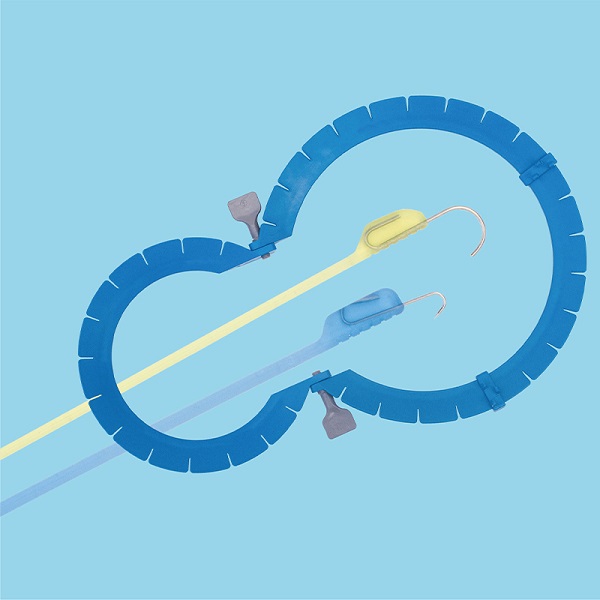
A skin hook retractor is a surgical instrument used to hold back the skin during operations. Surgeons use this tool to lift thin skin flaps and create space for working. The main purpose is to provide a clear view of the area being treated. Most models have a slender handle and a small hook at the end that gently grabs the skin edge without harming the dermis.
Common Features
Lightweight sterile plastic construction for easy, single-use handling
Single-prong, double-prong, and rake (multi-prong) hook configurations
Pre-packaged and pre-sterilized — ready for immediate use
Ergonomic design for comfortable grip and consistent control
Multiple hook placements and elastic stays for secure, stable retraction
Surgical Importance
Skin hook retractors play a vital role in many procedures. They move soft tissue out of the way to improve precision and reduce the risk of mistakes, while holding incisions open without tearing surrounding tissue.
Skin hook retractorsenhance visibility↗ for the surgeon
Provide control during delicate procedures
Prevent injury to skin and underlying tissue
Improved access leads to safer and more efficient surgeries
Types of Skin Hook Retractors
Single-Prong Hooks
Single-prong hooks are the most common type. Their single, slender hook allows precise control and minimal trauma, making them especially useful in thin or fragile skin — such as facial or hand surgeries.
| Tip Design | Key Benefits |
|---|---|
| Ball Tip | Minimizes traction injury, distributes load, supports fine neural dissection |
| Blunt Tip | Prevents inadvertent penetration; allows controlled mobilization |
| Semi-Sharp Tip | Engages delicate tissue without crushing; enables controlled nerve root elevation |
| Sharp Tip | Precise dissection without tissue crushing; supports three-dimensional positioning |
Surgeons select the appropriate tip based on the procedure and tissue type involved.
Double-Prong Hooks
Double-prong hooks distribute tension evenly across the incision, preventing distortion of skin edges — especially valuable during procedures that require precise suturing, such as facelifts or reconstructive surgeries.
| Hook Type | Design Specification | Primary Application | Risk Profile |
|---|---|---|---|
| Sharp Hook (Single/Double-Prong) | Micro-polished tip, 60–70° angle; penetrates only dermis and epidermis | Skin flaps in facelifts; subcutaneous dissection in rhinoplasty | Risk of puncture marks if applied too deeply |
| Blunt Hook (Single/Double-Prong) | Rounded tip for skin edge and subcutaneous tissue retraction | Delicate vascularized skin in blepharoplasty or periorbital surgery | Minimal puncture risk; possible superficial bruising under excess tension |
Multiple-Prong Hooks
Multiple-prong hooks (three or more hooks) are designed for situations requiring broader support — commonly used in general, abdominal, and orthopedic surgeries.
Holding incisions open during abdominal or general surgery
Stabilizing bones in orthopedic and spine procedures
Retracting soft tissues↗ in dental and oral surgeries
Manipulating delicate tissues in ophthalmology and ENT operations
Tip Designs
Sharp Tips
Sharp tips have a pointed end for precise, controlled lifts in delicate areas. They are useful in plastic surgery or when working near nerves and blood vessels — though careful handling is critical to avoid skin puncture.
Blunt Tips
Blunt tips feature a rounded end to prevent accidental injury. Ideal for fragile skin, pediatric surgery, and facial or eyelid procedures where bruising must be minimized.
Ball Tips
Ball tips spread force over a larger area, reducing the risk of tearing or cutting. They are particularly helpful in nerve and vascular procedures and in microsurgery requiring fine dissection.
Curved and Straight Hooks
Curved hooks allow surgeons to reach around corners or work in tight, deep spaces. Straight hooks provide a clear line of sight and are easy to control for surface-level procedures.
Surgitools Disposable Hook Configurations
While the broader surgical market includes many specialized metal hook instruments (Barsky, Converse, Gillies, etc.) designed for reusable use, Surgitools focuses on disposable sterile plastic retractors that cover the most widely needed configurations across surgical specialties. The Surgitools range includes:
Sharp Hooks (3 mm) — Models SG1601-H-1 / H-2 / H-6: precise engagement for fine tissue lifting
Sharp Hooks (5 mm) — Models SG1602-H-1 / H-2 / H-6: suited for broader incision retraction
Blunt Hooks (12 mm) — Models SG1603-H-1 / H-2 / H-6: gentle retraction for sensitive or fragile tissue
Two-Bifurcate Hooks (12 mm) — Models SG1604-H-1 / H-2 / H-4: double-prong design for even tension distribution
Retractor Frames — Models SG1601-R through SG1607-R: various frame sizes to match incision dimensions from minor outpatient procedures to larger open surgeries
Looking for High-Quality Disposable Skin Hook Retractors?
Surgitools provides sterile, pre-packaged disposable skin retractors (SG1601-R, SG1602-R, SG1603-R) trusted by surgical teams worldwide. Contact us today for product specifications, samples, or pricing.
Send an Inquiry NowDisposable Skin Hook Retractors
Design and Features
Disposable skin hook retractors are designed for single use. Made from high-quality sterile plastic and pre-packaged, they require no cleaning or sterilization before surgery. Many models feature multiple hook placements and elastic stays for consistent, secure retraction. Some also use radiolucent materials that do not interfere with X-ray or imaging equipment.
Made from sterile, medical-grade plastic
Pre-packaged for single use — ready immediately
Multiple hook placements for versatility
Elastic stays for secure positioning
Radiolucent materials for clear imaging compatibility
According to the World Health Organization↗, surgical site infections are the most common healthcare-associated infections, affecting up to 10% of patients in developed countries. Disposable retractors help reduce this risk by preventing cross-contamination.[2]
Advantages of Disposable Options
Eliminates risk of cross-contamination and infection
Saves time — no cleaning or sterilization needed
Supports efficient surgical workflow
Maintains imaging quality during procedures
Common Applications
Plastic and reconstructive surgery
Dermatological procedures
Emergency and trauma care
Outpatient and minor surgeries
Comparing Skin Hook Retractor Types
Handling and Control
Single-prong hooks provide precise control for delicate work on thin skin. Double-prong and multiple-prong hooks distribute force more evenly for larger areas. Ergonomic handles with textured grips reduce hand fatigue and prevent slipping during long procedures.
Tissue Safety
A well-designed skin hook retractor lifts tissue without crushing it, supporting faster healing. Key tissue safety considerations include:
Minimal Tissue Trauma: Punctures instead of crushes, preserving tissue viability
Puncture Risk: Sharp tips require careful handling to avoid glove or skin perforation
Retraction Force Limits: Not suitable for large muscle masses — other retractor types may be more effective
Maintenance Comparison
| Retractor Type | Cleaning | Sterilization | Inspection | Storage |
|---|---|---|---|---|
| Reusable | Yes | Yes | Yes | Dry, secure cabinets |
| Disposable | No | No (pre-sterilized) | No | Sealed packaging |
Choosing a Skin Hook Retractor
Procedure Matching
Small facial incisions typically require single-prong hooks with fine tips. Larger abdominal operations often need multiple-prong hooks for stronger, broader support. Curved hooks help reach deep or angled areas, while straight hooks suit surface-level work.
Surgeon Preference
Personal preference based on experience and comfort matters. Lightweight instruments, textured grips, and familiar handle shapes all contribute to confidence and efficiency in the operating room.
Patient Factors
| Patient Factor | Recommended Retractor Feature |
|---|---|
| Pediatric patients | Small, gentle hooks |
| Elderly patients | Blunt or ball tips |
| Sensitive skin | Soft, rounded edges |
| High risk of scarring | Minimal trauma design |
Sterilization Requirements
| Retractor Type | Sterilization Required | Cross-Contamination Risk | Staff Time Needed |
|---|---|---|---|
| Reusable | Yes | Higher | High |
| Disposable | No (pre-sterilized) | Very Low | Low |
Surgical Applications
Plastic Surgery
Skin hook retractors help plastic surgeons lift and hold thin skin flaps during operations such as rhinoplasty and eyelid repair. Their slim handle and fine hook enable precise work in tight spaces, while ergonomic designs reduce hand fatigue during lengthy procedures.
Dermatology
| Feature / Use | Description |
|---|---|
| Precise engagement | Single prongs for careful lifting; double prongs add stability |
| Tissue accommodation | Different widths prevent tears across varying skin thicknesses |
| Access | Long shafts reach deeper or tight spots |
| Control | Square handles provide better grip |
| Common uses | Biopsies, excisions, soft tissue retraction |
ENT and Ophthalmology
| Feature | Description |
|---|---|
| Principal uses | Broadens wound edges and raises skin flaps for better visibility |
| Hook design | Fine, precise tip configurations (sharp or blunt) for gentle tissue handling in small surgical fields |
| Handle | Ergonomic grip for secure, comfortable control throughout the procedure |
| Material | Sterile medical-grade plastic; single-use to eliminate cross-contamination risk |
Additional Surgical Applications
| Field | Example Procedures | Benefit |
|---|---|---|
| General Surgery | Hernia repair, appendectomy | Maintains open incision |
| Orthopedics | Hand/foot surgery, fracture repair | Exposes bone, protects tissue |
| Neurosurgery | Scalp retraction, craniotomy | Gentle tissue handling |
| Veterinary Medicine | Tumor removal, wound repair | Safe retraction for animals |
| Emergency Medicine | Laceration repair, trauma surgery | Quick, sterile access |
Care and Handling
Surgitools Disposable Skin Retractors are designed to simplify the entire pre- and post-operative workflow. Because they are single-use sterile plastic instruments, the complex reprocessing steps required for metal reusable retractors simply do not apply.
Before Surgery
No preparation needed: Each retractor arrives individually packaged and pre-sterilized — open the package and use immediately
Inspect packaging integrity: Check that the sealed package is undamaged before opening; do not use if the seal is broken
Select the correct model: Match the retractor frame size and hook type to the incision dimensions and tissue requirements
During Surgery
The elastic stays maintain consistent retraction tension without requiring the surgeon to hold the instrument
Multiple hook placements allow repositioning within the frame as the procedure progresses
The sterile plastic construction eliminates glare and does not interfere with electrosurgical equipment
After Surgery
Single use only: Discard the retractor after the procedure — do not attempt to clean, sterilize, or reuse
No cleaning required: Eliminates the time and cost associated with instrument reprocessing
No sterilization cycle needed: Frees up autoclave capacity for other reusable instruments
Proper handling of surgical instruments↗ is essential for patient safety and optimal performance. With disposable retractors, the risk of contamination from inadequate reprocessing is removed entirely.[3]
Storage
| Storage Requirement | Guideline |
|---|---|
| Location | Cool, dry storage area away from direct sunlight and moisture |
| Packaging | Keep in original sealed packaging until point of use |
| Organization | Sort by model number and frame size for quick intraoperative selection |
| Expiry | Observe the sterility expiry date printed on each package |
Reliable Manufacturers
Supplier Selection Criteria
| Criteria Category | Specific Criteria | Importance |
|---|---|---|
| Material Quality | Medical-grade sterile plastic; consistent wall thickness; no surface defects | Ensures safe single-use performance and structural integrity during retraction |
| Sterility Assurance | EO (ethylene oxide) sterilization; sealed individual packaging with expiry date | Guarantees each unit is ready for immediate use with zero contamination risk |
| Certifications | CE marking and ISO 13485 certification | Confirms compliance with international medical device standards |
| Supplier Reliability | 5+ years in operation; direct manufacturer (not trader); responsive communication | Shows consistency, quality control, and supply chain stability |
| Product Range | Multiple frame sizes and hook configurations to cover diverse surgical needs | Allows procurement of a complete solution from a single trusted source |
Surgitools Overview
Surgitools is a trusted manufacturer of disposable skin hook retractors, offering models SG1601-R, SG1602-R, and SG1603-R. Each retractor is made from sterile medical-grade plastic and comes pre-packaged for single use, with multiple hook placements and elastic stays for secure, consistent retraction.
When choosing skin hook retractors, consider manufacturers like Surgitools that combine quality, safety, and innovation to support the best possible patient outcomes.
FAQ
What is a skin hook retractor used for?
A skin hook retractor lifts and holds the edges of the skin during surgery, helping surgeons see the area better and protecting delicate tissue from injury.
How do single-prong and double-prong hooks differ?
Single-prong hooks provide precise control for small areas. Double-prong hooks spread tension evenly, making them better for wider incisions or thicker skin.
Are disposable skin hook retractors safe?
Yes. Disposable skin hook retractors come pre-sterilized and eliminate the risk of cross-contamination because each one is used only once.
When should a surgeon choose a blunt tip over a sharp tip?
Blunt tips are preferred for fragile or sensitive skin. Sharp tips work best for precise lifting in small or tight spaces. The choice depends on tissue characteristics and procedure type.
How do you clean reusable skin hook retractors?
Reusable retractors must be cleaned immediately after use. Staff rinse, scrub with medical-grade detergent, then sterilize in an autoclave — following hospital protocol to prevent infection.
Can skin hook retractors be used in emergencies?
Yes. They help doctors quickly open wounds for cleaning or repair. Disposable models are especially valuable in emergencies for speed and guaranteed sterility.
Request a Quote for Surgitools Skin Retractors
Whether you need samples, bulk pricing, or custom specifications — our team responds within 24 hours. Trusted by surgical teams across 30+ countries.
Get a Free Inquiry →References & Citations
PMC / National Library of Medicine — Curved Skin Hook Retractor Usage Data: https://pmc.ncbi.nlm.nih.gov/articles/PMC11571127/
World Health Organization — The Burden of Health Care-Associated Infection Worldwide: https://www.who.int/news-room/feature-stories/detail/the-burden-of-health-care-associated-infection-worldwide
Carnegie Surgical — A Comprehensive Guide on Cleaning Surgical Instruments: https://carnegiesurgical.com/news/a-comprehensive-guide-on-cleaning-surgical-instruments/
Surgical Republic — Types of Surgical Hooks and Their Uses: https://surgicalrepublic.com/blogs/news/types-of-surgical-hooks-and-their-uses-in-medical-procedures
The Plastics Fella — Surgical Instruments Overview: https://www.theplasticsfella.com/surgical-instruments/