

 molly@surgitoolssh.com



Laparoscopic retrieval bag market trends and forecast 2026
 Aug 04, 2026|
 View:216
Minimally invasive surgical departments worldwide continue to drive the expansion of the global laparoscopic retrieval bag market. These disposable clinical consumables are essential for modern operating rooms, with clear market valuation and growth data released for 2026 and long-term forecast cycles.
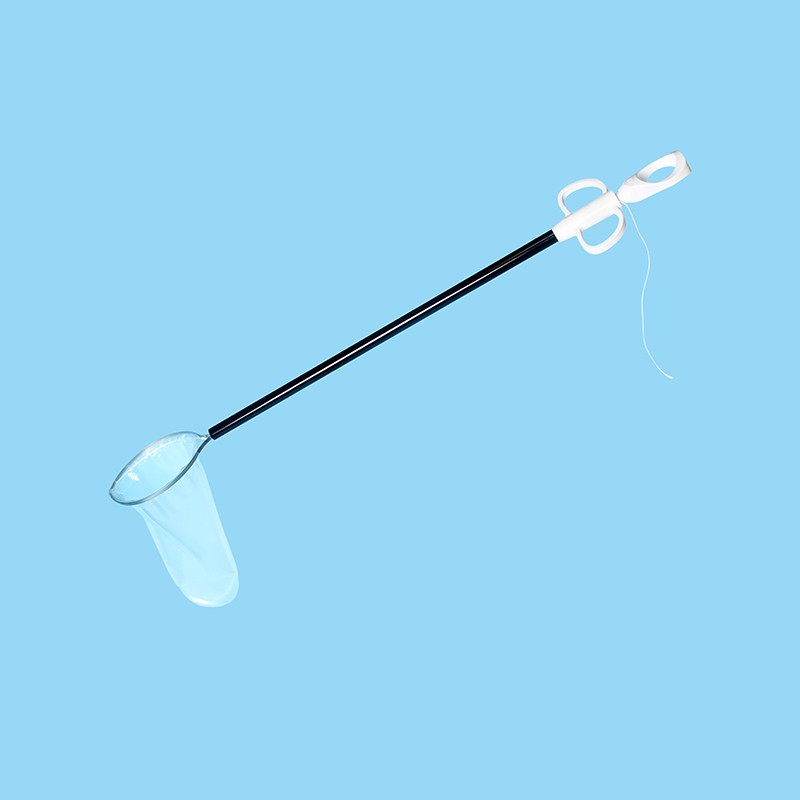
In 2026, the overall valuation of the global laparoscopic retrieval bag market ranges from USD 333.51 million to USD 520.6 million, supported by a steady 7.6% compound annual growth rate (CAGR) that will sustain market expansion through 2034. Single-use products represented by Surgitools Disposable Retrieval Bags bear core clinical value in minimally invasive surgery procedures.
Key Takeaways
The global laparoscopic retrieval bag market maintains stable expansion, with a sustained 7.6% CAGR until 2034.
Single-use retrieval bags effectively reduce surgical site infections and block oncological seeding during tumor resection surgery.
Burst-resistant TPU innovative materials eliminate risks of bag rupture and fluid leakage during specimen extraction.
Automatic memory wire self-opening bags shorten intraoperative operation time and improve surgical workflow efficiency.
North America occupies the leading share of the global market, benefited from large-scale popularization of minimally invasive operations in local hospital systems.
Global Laparoscopic Retrieval Bag Market Forecast 2026
Market Valuation and CAGR Projections
Professional medical device industry analysts track the operation and procurement data of global medical institutions, confirming the global laparoscopic retrieval bag market will hit USD 520.6 million in 2026, with a 7.6% CAGR covering the 2026–2034 forecast window. The surge of minimally invasive and robotic laparoscopy globally is the core driving force behind this long-term growth trend.
The broader specimen retrieval bag market includes multiple segmented tracks with differentiated scale and growth indicators, and the core data comparison is shown in the table below:
| Market Segment / Metric | Valuation Baseline | Projected Valuation | Compound Annual Growth Rate (CAGR) | Forecast Period |
|---|---|---|---|---|
| Global Laparoscopic Retrieval Bag Market | US$520.6 Million (2026) | Expanding through 2034 | 7.6% | 2026–2034 |
| Specimen Retrieval Bag Market Segment A | USD 348.2 Million (2026) | USD 464.5 Million | 4.2% | 2026–2033 |
| Specimen Retrieval Bag Market Segment B | USD 472.9 Million (2023) | USD 756.03 Million | 6.9% | 2023–2030 |
| Broader Specimen Retrieval Bag Market | USD 1.455 Billion (2026) | USD 1.37B (2025 baseline) | 6.23% | 2025–2035 |
The automatic opening retrieval bag sub-segment also maintains independent growth momentum, recording a 4.8% CAGR from 2026 to 2033. Surgeons widely recognize auto-opening designs for their obvious advantages in simplifying intraoperative specimen capture steps.
Macroeconomic Factors Accelerating Market Adoption
Continuous increase in government public health expenditure globally, large-scale renovation of operating room equipment and surgical specialist training investment.
Popularization of medical insurance coverage for minimally invasive procedures, driving hospitals to increase procurement volume of sterile single-use retrieval consumables.
Growing incidence of gastrointestinal, gynecological and oncological diseases, raising the total volume of laparoscopic surgeries and rigid demand for specimen storage bags.
Laparoscopic Retrieval Bag Market Growth Drivers
1. Surge in Minimally Invasive & Robotic Surgeries
Minimally invasive laparoscopy and robotic surgery deliver core advantages of tiny incisions, mild postoperative pain and fast patient recovery, leading to year-by-year rising operation volumes. Robotic surgery cases reached 626 in 2025 and will maintain sustained growth until 2032. Robotic surgical systems match flexible, leak-proof retrieval bags as essential supporting consumables.
Relevant clinical standardized specifications for robotic minimally invasive surgery can be referenced via authoritative global medical platform: Minimally Invasive Surgical Equipment Clinical Application Standards
2. Infection Control & Cross-Contamination Prevention Requirements
Retrieval bags form a complete physical isolation barrier during specimen extraction, solving two core clinical risks: surgical site infection and tumor cell implantation metastasis. The verified clinical benefits for different procedures are sorted as follows:
| Procedure / Infection Measure | Observed Clinical Benefit | Key Mechanism / Outcome |
|---|---|---|
| Overall Surgical Procedures | 60% to 75% total reduction in infections | Isolate contaminated tissue to cut off pathogen spread channels |
| Appendectomy & Cholecystectomy | 65% to 80% decrease in Surgical Site Infections (SSIs) | Prevent gallstone, pus and infected tissue leakage to trocar incisions |
| Complicated Appendicitis | Significant reduction in peritoneal abscesses | Fully contain inflammatory necrotic tissue during removal |
| Acute Cholecystitis | Marked drop in postoperative peritoneal complications | Block bile and inflammatory fluid overflow into abdominal cavity |
| Oncological Laparoscopy | High rate of port-site metastasis prevention | Seal tumor tissue completely to avoid cancer cell shedding and implantation |
3. TPU Material Innovation & Burst-Resistant Structural Upgrade
Traditional plastic retrieval bags are prone to tearing when extracting large heavy specimens; upgraded medical TPU material solves this pain point with balanced toughness, flexibility and pressure resistance. Manufacturers provide full-size product matrix covering 60ml–1600ml volume, compatible with 5mm–15mm standard trocar specifications:
60ml–200ml: Matching routine minor surgeries such as appendectomy and cholecystectomy
1000ml–1600ml: For large tumor resection, complex gynecological minimally invasive procedures
For medical TPU biocompatibility and sterile verification standards, check authoritative ISO official documents: ISO 10993 Biological Evaluation of Medical Devices
4. Automatic Memory Wire Deployment & Ergonomic Optimization
The standard workflow of auto-opening memory wire retrieval bags optimizes surgical operation logic, reducing redundant intraoperative steps:
Trocar Insertion → Handle Activation → Memory Wire Deployment → Specimen Capture → Cinch & Extraction
Compared with manually expanded retrieval bags, memory wire automatic deployment greatly shortens specimen collection time and optimizes operating room turnover efficiency. Surgitools Disposable Retrieval Bags adopt full TPU + memory wire ring integrated design, covering all mainstream clinical volume specifications.
Market Segmentation Analysis & Application Scenarios
1. Detachable vs Non-Detachable Retrieval Systems
| Retrieval System Type | Market Share Status | Key Drivers & Usage Context |
|---|---|---|
| Detachable Systems | Dominant market share | Detachable pouch releases trocar channel for other instruments, flexible for complex multi-step laparoscopy |
| Non-Detachable Systems | Smaller market proportion | Stable connection between pouch and handle, higher reliability for simple standardized surgeries |
2. End-User Market Split: Hospitals & Ambulatory Surgical Centers (ASCs)
Large comprehensive hospitals remain the core purchasing group, holding massive inventory reserves for emergency and complex minimally invasive surgeries. Meanwhile, ambulatory surgical centers are gaining increasing market share: outpatient clinics focus on short-time minor procedures and prefer sterile, fast-operation auto-opening retrieval bags to accelerate patient turnover.
Regional Market Insights
North America: Global market leader, benefited from mature minimally invasive surgery infrastructure, high robot equipment penetration and complete medical device R&D system.
Europe: Strict clinical safety regulations force universal adoption of single-use retrieval bags; local research data confirms 2.1% port-site tumor recurrence rate without complete specimen isolation bags, pushing rigid procurement demands.
Asia-Pacific: Rapid expansion of new hospital infrastructure, growing population base and rising popularity of abdominal, gynecological minimally invasive operations drive incremental market demand.
Latin America, Middle East & Africa: Government medical budget expansion, standardized surgical care construction bring new growth space for single-use laparoscopic consumables.
Procurement Strategy & OEM Quality Control Standards
1. Supply Chain Cost Optimization Suggestions
Industry data shows unused open surgical supplies occupy 20.1% of hospital surgical department expenditure. Direct procurement cooperation with certified manufacturers can cut intermediate markup costs by 18.3% and avoid periodic supply shortages.
2. Mandatory International Certification Requirements
Qualified retrieval bag manufacturers must pass full sets of medical device quality system certification to enter global markets:
ISO 13485 & ISO 9001: Medical device full quality management system certification
ISO 10993: Biocompatibility non-toxicity testing certification
ISO 11135: EO ethylene oxide sterilization process verification
FDA Clearance (US market) & CE Marking (EU market): Cross-border market access qualification
3. Standard OEM Production Quality Control Flow
TPU Raw Material Testing → Class 100 Cleanroom Automated Packaging → EO Sterilization → Full Performance Quality Inspection
Professional OEM manufacturers such as Surgitools support customized size, packaging and sterilization schemes for global medical institutions and distributors.
Need Custom Quotation & Free Sample of Laparoscopic Retrieval Bags?
We supply full-spec TPU disposable specimen retrieval bags with complete CE/FDA/ISO certifications, support OEM customized production and fast global delivery.
Submit Inquiry For Price & SamplesFrequently Asked Questions
Q1: What core factors drive the growth of laparoscopic retrieval bag market before 2026–2034?
The core drivers include continuous growth of minimally invasive/robotic surgery volume, strict clinical infection prevention and tumor implantation control requirements, iterative upgrade of high-strength TPU materials, and auto-opening structural design improving surgical efficiency.
Q2: Why TPU material is superior to traditional plastic for specimen retrieval bags?
Medical-grade TPU has outstanding tensile strength and flexibility, effectively avoiding bag rupture, puncture and liquid leakage during specimen extraction, fully isolating infected or tumor tissue to protect patient intraoperative safety.
Q3: How do automatic memory wire bags improve operating room efficiency?
The memory wire ring automatically expands inside the human body after trocar delivery, eliminating extra auxiliary tools to expand the bag mouth, simplifying specimen loading operation and significantly shortening single-operation time.
[1] Industry Research Report: Laparoscopic retrieval bag market trends and forecast 2026, Aug 04, 2026
[2] Enterprise official data: Segimedical (Surgitools) minimally invasive surgical consumable product and manufacturing system information, https://www.segimedical.com/
[3] Authoritative external reference links: NCBI minimally invasive surgery clinical standard database (https://www.ncbi.nlm.nih.gov/books/NBK560856/), ISO medical device biocompatibility official standard document (https://www.iso.org/standard/61596.html)