molly@surgitoolssh.com



What Materials Are Used in a Disposable Wound Protector and How Do They Perform?
 Nov 24, 2026|
 View:7
A Disposable Wound Protector is judged by more than a material name. Film clarity, ring softness, Shore hardness and tissue contact behavior together decide how predictably the device seats and protects the incision edge.
Key Takeaways
The device is a system of sheath, ring and weld; no single polymer name describes its performance.
Silicone elastomer is usually specified by Shore A softness and elastic recovery, while polyurethane film is often specified by thickness, tensile behavior and optical clarity.
A higher durometer reading means a stiffer component, not a more tissue friendly one.
Published coverage runs from a 10 mm flexible ring to a 250 mm rigid ring, with sheath lengths from 110 mm to 360 mm.
Tissue compatibility is documented through device level evaluation, not inferred from softness or transparency alone.
What Is a Disposable Wound Protector Made Of?
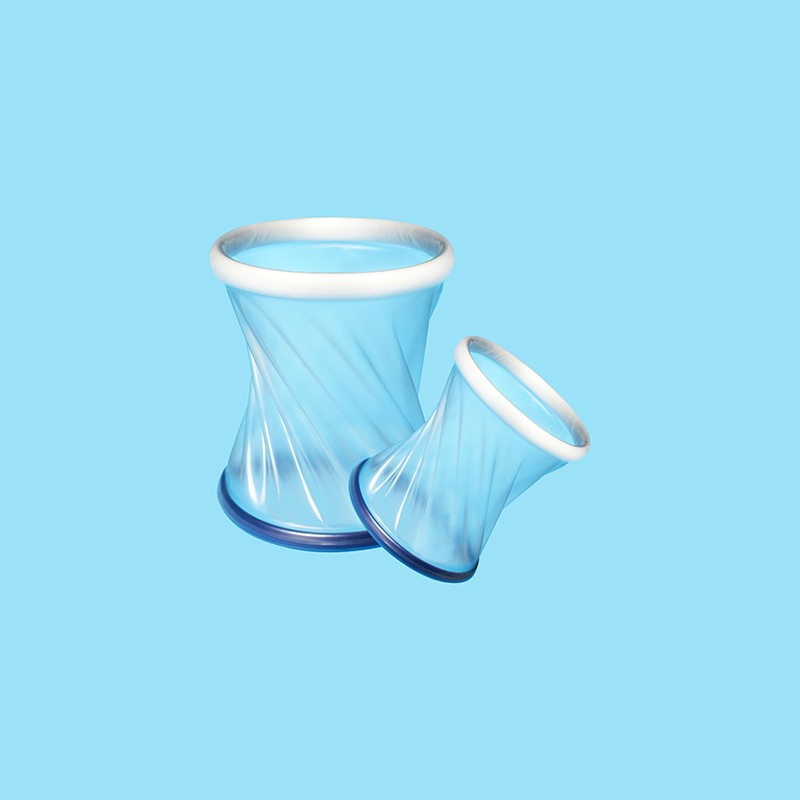
The device is a thin film sleeve attached to a ring. The ring holds the opening, the sleeve lines the wound edge, and the weld between them keeps the barrier in place while instruments and specimens pass through. The supplier moulds rings in house and welds the sheath rather than stitching it, with microbial limit and sterility testing run on each batch. Those controls sit within the type of documented manufacturing framework described in federal quality system requirements for medical devices. The published catalogue gives ring formats, sheath lengths and incision ranges, but it does not declare one polymer grade or a single durometer value for every device. Buyers therefore compare material behavior by component instead of assuming that one resin name covers the whole product. The published sizing guide sets out the measurement sequence that should precede any material choice.
Silicone Elastomer in a Disposable Wound Protector
Silicone elastomers are cross linked siloxane networks valued for low modulus, high elongation and elastic recovery. In a ring, that combination lets the device roll down into position and then spring back to hold a circular opening. Soft medical silicone grades are commonly described by Shore A readings in the lower to middle part of the scale, with general purpose ranges roughly from 30 to 70 Shore A. Those figures describe elastomer families, not a published value for these devices. A lower reading generally means easier folding and gentler contact; a higher reading means more shape retention and more force needed during insertion. Silicone films can be made clear, but a thicker elastomer film may show more haze than a thin cast film.
Polyurethane Film in a Disposable Wound Protector
Polyurethane is a block copolymer built from hard and soft segments, so the same chemistry family can produce both soft elastic rings and thin, strong films. A film sheath is usually described by gauge, tensile strength, elongation and clarity rather than by durometer, because a durometer indenter is not meaningful on a very thin membrane. Polyurethane elastomer parts can span a broader hardness window than soft silicone, with firmer grades used where a ring must resist folding in a deep or thick walled incision. The trade off is formulation complexity: hard segment ratio, plasticizer or additive package and surface finish all influence stiffness, clarity and contact behavior. Material selection therefore starts with the role of each component, not with a preference for one polymer name.
Shore Hardness in a Disposable Wound Protector Ring
Shore hardness is an indentation reading. A durometer presses a defined foot into the elastomer under a set load, and the depth of penetration is converted to a scale value. Shore A is used for soft elastomers; Shore D applies to rigid plastics. The number is empirical, so it should be read with the test method, sample thickness and conditioning conditions. It is useful for comparing rings, but it does not measure biocompatibility, tear strength or the force actually applied to tissue.
Soft range, about 30 to 50 Shore A. The ring folds easily and conforms to irregular openings, but a very soft ring can collapse when retraction is needed in dense tissue.
Mid range, about 55 to 75 Shore A. This band is often chosen when a ring must both roll into place and keep a stable opening through a longer case.
Firm range, about 80 Shore A and above. A firmer ring holds shape with less wall contact, yet insertion takes more force and a sharp edge can concentrate pressure.
The ranges above are general elastomer practice rather than model values published for the listed references. For any purchase, ask for the measured Shore A of the exact ring reference, then confirm it against the incision range and sheath length published for that reference.
Request Material and Hardness Data for the Exact Ring
Published specifications and documentation can be requested before an order is placed.
Transparency in a Disposable Wound Protector Film
A clear sheath matters because the surgeon needs to see the wound margin, the instrument path and any fluid or specimen moving through the opening. The catalogue describes clear wound margin visibility and enhanced surgical field exposure as design benefits of the range. Optical performance depends on polymer structure, film gauge, surface finish and fogging behavior during a case. A haze free film is not automatically stronger or more biocompatible, and a film that looks clear in the pouch can fog once it contacts warm tissue. Teams that rely on direct vision should evaluate a sample under operating room lighting, not only against the catalogue image. Film clarity also supports the barrier role outlined in infection prevention discussions indexed in the medical device product classification database.
Tissue Compatibility of a Disposable Wound Protector
Tissue compatibility is a device level question. A smooth, non absorbent contact surface reduces abrasion and makes cleaning of the field more predictable, but the biological response depends on the finished material, additives, processing and sterilization, not on the base polymer alone. Silicone is often selected for chemical inertness and stable softness across temperature; polyurethane is selected where thin gauge strength and controlled moisture transmission are useful. Neither material is automatically compatible in every contact scenario. Risk based biological evaluation, such as the test selection described in the ISO 10993 family, is the accepted way to document safety for the intended contact type and duration. The supplier lists CE, EN-ISO 13485:2016 and FDA files for its range; the documentation for the exact model should be requested before a purchasing decision.
The mechanical side of compatibility is equally practical. Circumferential retraction spreads force around the incision instead of loading one point, and the sheath keeps the margin moist while separating it from instruments and specimen contact. Those effects come from geometry and surface behavior as much as from hardness. A well chosen rigid ring wound retractor holds a fixed opening for open abdominal work, while a flexible ring wound protector rolls into smaller or irregular incisions. Both formats share the same sheath logic, so material questions can be asked once and then checked against the chosen ring geometry.
The two published ring formats show how the same film concept is adapted to different incisions.
Rigid Ring Wound Retractor
Five published references cover incision ranges from 25 mm to 250 mm with sheath lengths from 180 mm to 360 mm.
View Product
Flexible Ring Wound Protector
Eight published references cover incision ranges from 10 mm to 170 mm, including brief sheath options for shallow sites.
View ProductHow to Specify a Disposable Wound Protector by Material and Performance
A short specification checklist keeps material claims comparable between suppliers:
Ask for the polymer identity of both the sheath and the ring, including the grade or formulation reference.
Request the Shore A value of the ring, plus film gauge, tensile strength and elongation for the sheath.
Ask how clarity is checked and whether anti fog behavior is tested after sterilization.
Request the biological evaluation summary, sterility validation, shelf life and lot traceability for the exact model.
Match the measured incision to the published range, then check sheath length against tissue depth before ordering.
The published catalogue lists thirteen references across two ring formats, so these checks can be completed before a sample request. Teams that work through the list can compare a soft ring against a firm ring on the same basis, and can separate optical performance from biological documentation. The result is a specification that survives review by surgery, procurement and quality functions.
| Disposable Wound Protector element | Common specification metric | Practical effect | What to verify |
|---|---|---|---|
| Silicone elastomer ring | Shore A and elastic recovery | Rolls into position and distributes retraction force | Measured value for the exact reference |
| Polyurethane elastomer ring | Shore A or Shore D, tear strength | Holds a firmer circular opening in dense tissue | Insertion force and edge finish |
| Film sheath | Gauge, tensile strength, elongation | Lines the margin and blocks instrument contact | Sample behavior under operating room lighting |
| Film surface | Clarity, haze, anti fog treatment | Keeps the wound margin visible during the case | Sample evaluation after sterilization |
| Ring to sheath weld | Weld strength and continuity | Keeps the barrier seated through specimen removal | Batch inspection and sterility records |
| Published reference | Ring format | Incision range | Sheath length |
|---|---|---|---|
| SG8831 | Flexible ring, XX small | 10 to 30 mm | 200 mm |
| SG8832 | Flexible ring, XX small brief | 10 to 30 mm | 110 mm |
| SG8801 | Rigid ring, small | 25 to 60 mm | 180 mm |
| SG8805 | Rigid ring, XX large | 170 to 250 mm | 360 mm |
| SG8838 | Flexible ring, X large | 110 to 170 mm | 340 mm |
Compare Sizes and Request Evaluation Samples
Reference numbers, incision ranges and sheath lengths can be checked against a measured incision before a sample is requested.
Conclusion
Silicone and polyurethane both appear in wound contact devices, but they solve different problems. Silicone brings softness and elastic recovery that are easy to read through Shore A; polyurethane brings thin gauge strength and controllable film clarity. Neither property alone settles tissue compatibility, which belongs to the finished device and its documentation. Ring format, incision range and sheath length then decide whether the material behaves as intended in a real case. Buyers who check all four layers obtain a more reliable picture than one based on a material name.
For readers comparing Disposable Wound Protector manufacturers, Segitools provides published size ranges, ring format options, technical documentation and direct inquiry channels for further evaluation.
FAQ
What materials are used in a Disposable Wound Protector?
The sheath is a thin polymer film and the ring is an elastomer or firm polymer. Silicone and polyurethane are common material families in wound contact devices. The catalogue publishes formats and sizes but not one polymer grade for every model, so the exact material should be confirmed for the chosen reference.
Does a higher Shore A number mean a better Disposable Wound Protector ring?
No. A higher Shore A reading means a stiffer ring. That can help hold an opening in dense tissue, but it can also make insertion harder. Softness or stiffness should be matched to the incision and the surgeon's handling preference.
Is a clear film proof of better tissue compatibility?
No. Clarity helps the surgical team see the wound margin, while compatibility depends on the finished material, additives, processing and sterilization. Both claims need separate evidence.
How does the film protect the wound edge during specimen removal?
The sheath lines the incision wall so the margin does not rub directly against instruments or the specimen. The ring holds that sleeve in place, and the weld keeps the barrier continuous while tissue is retracted circumferentially.
What size data matters most when ordering?
Use the recommended incision range first, then check sheath length against tissue depth. The catalogue publishes thirteen references covering 10 mm to 250 mm incisions with sheath lengths from 110 mm to 360 mm.
References and Notes
medical device product classification database — supports the description of device level regulatory classification (fda.gov, accessed 2026-11-24)
federal quality system requirements for medical devices — supports the discussion of documented manufacturing and inspection controls (ecfr.gov, accessed 2026-11-24)
polymer materials used in healthcare and medical applications — supports the general point that polymer selection balances comfort, protection and regulatory expectations (dow.com, accessed 2026-11-24)
Product data source: Segitools Disposable Wound Protector category page plus the rigid ring and flexible ring detail pages. Published references are SG8801 to SG8805 and SG8831 to SG8838, with sheath lengths and incision ranges as listed in the tables above.
Data notes: Shore A bands describe general elastomer families and are not values published for any Segitools model. The catalogue does not declare a single polymer grade, film gauge or durometer value for the device. ISO 10993 is referenced as a framework for biological evaluation; no specific test result is implied. CE, EN-ISO 13485:2016 and FDA files are stated on the supplier pages and should be verified at model level.