molly@surgitoolssh.com



How to Choose the Right Disposable Wound Protector Size for Your Incision
 Nov 06, 2026|
 View:5
Choosing a disposable wound protector comes down to five steps: measure the incision at its widest point, read the sizing chart by incision range, weigh procedure and patient factors, compare the available designs, and avoid the sizing errors that recur in practice.
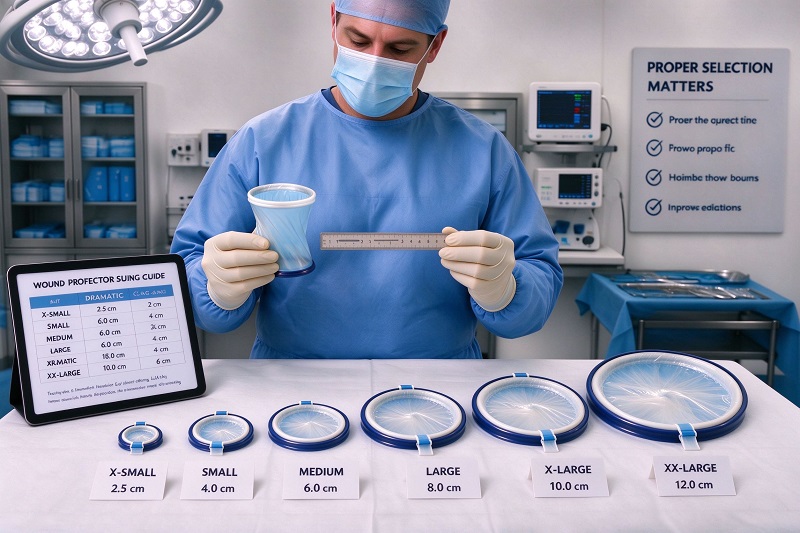
Five practical steps guide the choice of a wound protector: measure the incision, consult the manufacturer's sizing chart, weigh procedure type and patient factors, compare the available designs, and avoid the common sizing errors. A poor fit carries clinical consequences. Loose seating allows the wound edge protector to shift, difficult retraction limits exposure, and reduced wound-edge protection weakens the barrier against contamination. Each outcome affects the surgical field and the tissue margins.
Selecting a disposable wound protector begins with accurate measurement, careful chart reading, and attention to procedure demands. Clinicians who compare wound protectors on sheath length, ring retention, and sterility make better-informed decisions. A systematic approach helps surgical teams choose the right wound protector size for every case and avoid common sizing errors.
Key Takeaways
Measure the incision at its widest point using a sterile ruler or tape.
Record the measurement before surgery and verify it again in the operating room.
Read the sizing chart's incision range first, not the device diameter.
Match the measured incision to the recommended range on the chart.
Consider procedure type, duration, and contamination risk when comparing single-ring and dual-ring wound protector designs.
Check sheath length against tissue depth to ensure proper seating.
Avoid rounding down; round up to allow for tissue relaxation.
Verify sterilization, packaging, and labeling before ordering any wound protector.
Step 1: Measure the Incision Accurately
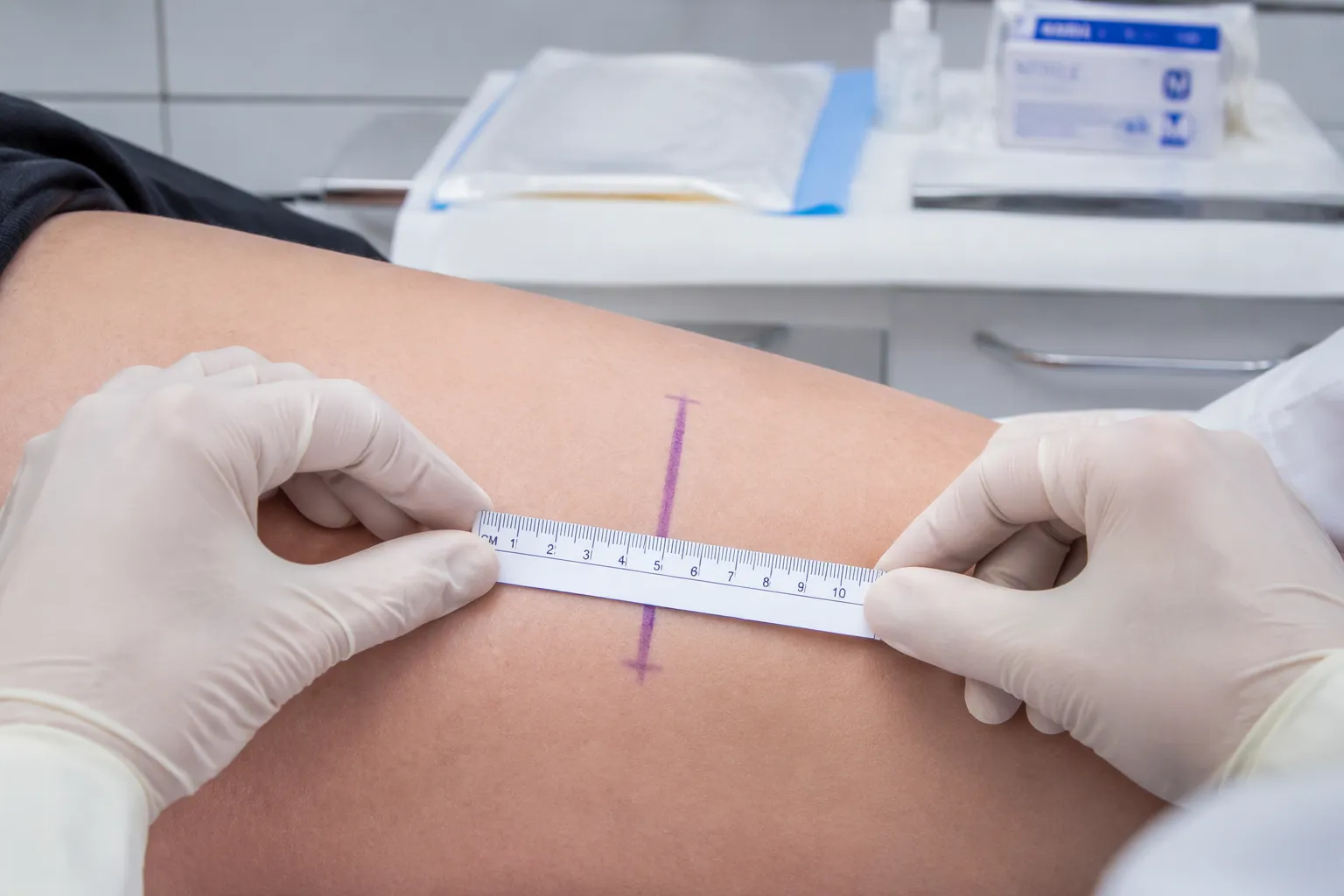
Accurate measurement is the foundation of choosing the right wound protector size. A clinician cannot select an appropriate size based on incision dimensions without a reliable number to work from. The measurement is taken at the widest point of the incision. This single value anchors every later decision, from chart reading to product selection.
Tools for Measurement
Sterile ruler or tape
A sterile ruler or measuring tape is the standard tool for this task. Both instruments sit flat against the tissue and give a direct reading in centimeters or millimeters. The sterile packaging matters. A tool that contacts the open incision must not introduce contamination into the surgical field. Teams should keep a dedicated sterile ruler in the room rather than borrowing a non-sterile one from a drawer.
Widest-point measurement
The widest point of the incision governs the choice, not the average width. Tissue edges rarely sit in a straight line. A surgeon who measures only the narrowest segment will understate the true opening. The widest span tells the clinician how much device coverage the wound actually needs. This principle applies to every incision, whether short or long.
Matching Measurement to Incision Shape
Linear versus curved incisions
A straight, linear incision usually yields one clean number. Curved or irregular incisions behave differently. These shapes may require measuring length and width separately. A curved incision can span a long distance along its arc while opening only a modest gap across the tissue. Recording both dimensions prevents a clinician from choosing a device that covers the arc but leaves the width exposed.
Length versus diameter
Length and diameter describe different things, and clinicians sometimes treat them as interchangeable. Length refers to the distance along the cut. Diameter refers to the opening across it. A wound protector must accommodate the opening it will seat into, so the cross-wise dimension often matters most. When in doubt, record both values and note which one represents the widest gap.
Documenting Incision Size
Recording before surgery
Documentation should happen before the procedure begins. The surgical team records the measured incision size in the patient record or the pre-operative note. This step creates a reference point that travels with the patient into the operating room. A written number removes guesswork and lets the team prepare the correct device in advance.
Verifying in the OR
The team should re-verify the measurement in the operating room. Tissue relaxation or retraction can change apparent dimensions once the patient is positioned and draped. A number recorded on the ward may no longer match the open field. Re-checking takes seconds and protects against a mismatch between the planned device and the actual opening.
Measure the incision at its widest point, record the value before surgery, and confirm it again in the operating room. These three habits prevent most sizing errors before they reach the sterile field.
The verification step also supports planning. If the confirmed size of the incision differs from the earlier note, the team can adjust the device choice before the wound is opened further. This sequence of measure, record, and verify turns a rough estimate into a dependable figure. Clinicians who follow it can then move to the sizing chart with confidence, knowing the number reflects the incision they will actually work with.
Step 2: Read the Disposable Wound Protector Sizing Chart
Manufacturers publish recommended incision ranges for every model they sell. The correct approach is simple: match the recommended range to the actual incision length recorded in Step 1. A clinician who skips this step risks choosing a device by habit or by eye, and neither method holds up under the demands of a real case.
How Sizing Charts Work
Incision range versus device diameter
A sizing chart lists two different numbers, and readers often confuse them. The incision range describes the opening the device can serve. The device diameter describes the physical ring the surgeon handles. These values move together but they are not the same figure. A ring that measures a given diameter may serve a range of incision lengths because the sheath folds and adapts. Clinicians should read the range column first and treat the diameter column as a secondary check.
Size labels and reference numbers
Charts typically assign labels such as small, medium, and large, and each label carries a reference number. The label alone can mislead across manufacturers, because one company's medium may equal another company's large. The reference number tied to the published range is the reliable anchor. Teams should order by that number and confirm the range printed on the packaging before the case begins.
Matching Your Incision Size to a Range
Selecting the covering size
Neutral example ranges show how the logic works. A medium size may fit incisions of roughly 5 to 9 cm. A large size may fit roughly 9 to 14 cm and may include a retraction ring. These figures are illustrative, not brand recommendations. A measured incision of 8 cm falls inside the medium range, so the medium device covers it. The same 8 cm incision sits below the large range, which means the large device would add unnecessary bulk to the field.
When to size up
A clinician should size up when the measured value sits near the top of a range, when the tissue is expected to relax further, or when the procedure demands greater retraction and visibility. The wound protector should be large enough to cover the incision site and surrounding tissue without obstructing the surgical field. Sheath length specifications must also suit the incision depth. A device with adequate coverage but a short sheath will not seat properly in a deep wound.
Checking Product Specifications
Ring dimensions and sheath length
Published specification tables give the detail a range column cannot. Ring, channel, and height dimensions vary widely between models, and the spread is wide enough to change which device suits a given incision. The table below summarises representative dimensions published for single-ring (QKA) and dual-ring (QKB) configurations.
| TYPE | Specification | Inner ring diameter (mm) | Outer ring diameter (mm) | Channel diameter (mm) | Height (mm) |
|---|---|---|---|---|---|
| HAS QKA | 60/70-60/150 | 70 | 60 | 60 | 150 |
| HAS QKA | 80/90-80/150 | 90 | 80 | 80 | 150 |
| HAS QKA | 120/130-120/250 | 130 | 120 | 120 | 250 |
| HAS QKA | 150/160-150/250 | 160 | 150 | 150 | 250 |
| HAS QKA | 180/190-180/250 | 190 | 180 | 180 | 250 |
| HAS QKA | 220/230-220/250 | 230 | 220 | 220 | 250 |
| HAS QKB | 40/30-15/20 | 40 | 30 | 15 | 20 |
| HAS QKB | 50/40-15/20 | 50 | 40 | 15 | 20 |
| HAS QKB | 70/70-35/25 | 70 | 70 | 35 | 25 |
| HAS QKB | 70/60-35/5 | 70 | 60 | 35 | 5 |
| HAS QKB | 100/50-35/5 | 100 | 50 | 35 | 5 |
The chart below compares inner ring diameter, outer ring diameter, channel diameter, and height across the same specifications.
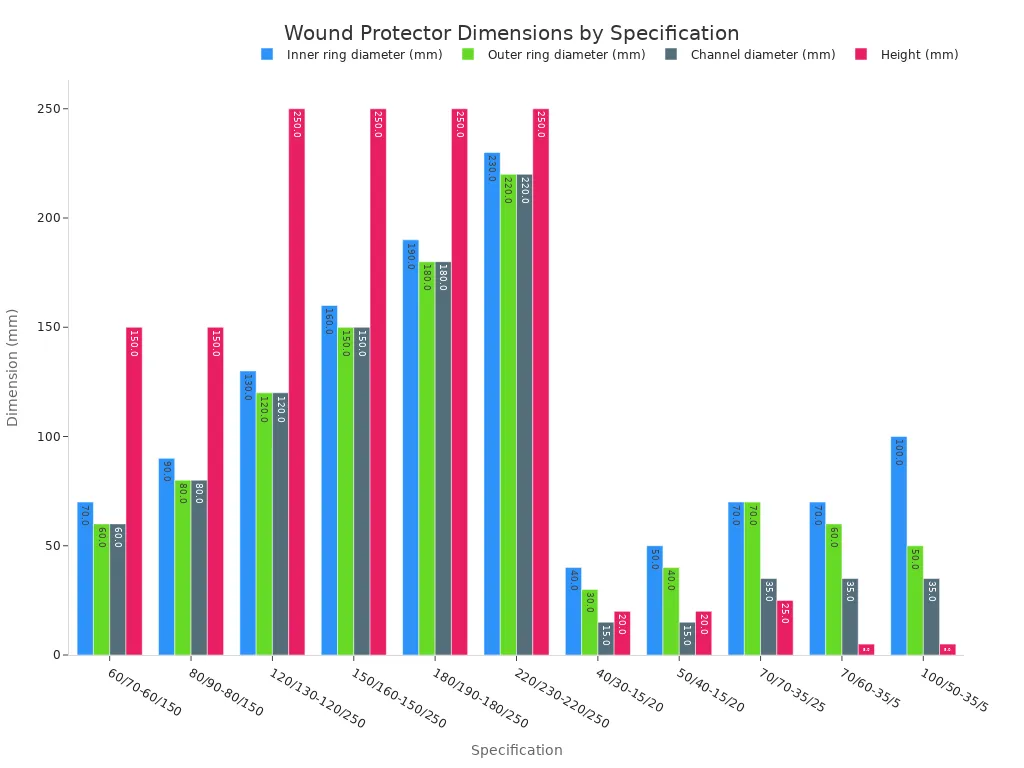
The height column deserves close attention. Models in the QKA line reach 150 to 250 mm, while QKB models sit at 5 to 25 mm. A deep abdominal incision needs the longer sheath. A shallow wound does not.
Retractor compatibility
Design also shapes selection. Flexible-ring models adapt to the shape and size of the incision, and smaller incisions may benefit from single-ring models. Dual-ring designs are often chosen for larger operations where greater retraction and visibility are needed. In the published placement sequence for these devices, the surgeon makes an incision adequate to accommodate the wound protector, then repeats rolling the grey proximal ring until the incision is retracted and the device sits tight against the wound walls. That rolling action explains why ring flexibility matters. A stiff ring resists the roll, and a flexible ring seats with less effort.
Retractor handling follows the same principles as any other retractor placement, and the technique described for a skin hook retractor applies here as well: controlled tension, direct vision, and minimal trauma to the wound edge. A circumferential wound retractor distributes force evenly around the opening, and the right wound protector based on incision size supports that even distribution. Teams that check ring dimensions, sheath length, and retractor compatibility against the measured incision size will select an appropriate size for the case at hand.
Need the Right Protector Size for the Next Case?
Share the measured incision range and procedure type, and the published sizing data can be matched to a specific reference number before the case is scheduled.
Step 3: Factors in Choosing the Right Wound Protector
Numbers alone do not settle the choice for a disposable wound protector. The type of surgery and its duration shape how much stability and coverage the field demands. A team choosing the right wound protector weighs these factors alongside the measured opening.
Procedure Type and Duration
Short versus long cases
A short case tolerates a simpler device. A long case places steady stress on the ring and sheath, so a more secure ring and adequate sheath length matter more. Surgitools Medical notes that larger or more complex operations often require dual-ring designs for added stability and protection. The table below shows how wound protectors map to surgical scenarios, based on Surgitools Medical's published comparison.
| Type | Structure | Retraction Method | Infection Barrier | Common Use | Adaptability |
|---|---|---|---|---|---|
| Flexible Ring | Soft circular ring | Gentle, 360° retraction | Moderate to high | Laparoscopic, open | Fits variable sizes |
| Rigid Ring | Firm circular ring | Strong, 360° retraction | High | Laparoscopic, open | Precise fit |
| Single-Ring | One internal ring | Basic retraction | Moderate | Small incisions | Simple setup |
| Double-Ring | Internal & external | Enhanced retraction | Highest | Large/complex cases | Stable, secure |
Open versus minimally invasive
Minimally invasive work often involves mini-laparotomy or specimen extraction openings. Flexible ring models adapt well to variable openings, which suits these smaller sites. Open surgery with a wide field leans toward designs that hold strong retraction across a longer case.
Contamination Risk Level
Clean versus contaminated cases
Contamination risk shifts protection priorities. A clean case emphasizes atraumatic retraction. A contaminated case, such as a bowel procedure, emphasizes a barrier at the wound edge. Surgitools Medical notes that double-ring designs often provide the strongest barrier against infection, especially in contaminated wounds. Pooled trial evidence points in the same direction: a meta-analysis of 18 randomised trials covering 3,808 abdominal operations reported an overall reduction in surgical site infection with wound edge protectors (odds ratio 0.59, 95% CI 0.43 to 0.81), and the largest effect appeared in contaminated wounds (odds ratio 0.24, 95% CI 0.12 to 0.49). A multicentre randomised trial in open gastrointestinal surgery reported surgical site infection in 10.9% of patients treated with a dual-ring protector, compared with 20.5% of those treated with surgical gauze.
Protection needs by risk
A properly sized wound-edge protector that maintains a seal supports wound-edge protection at every risk level. The device must sit tight against the wound walls. A loose seal defeats the purpose of a wound edge protector, whatever the case classification.
Tissue Depth and Patient Factors
Abdominal wall thickness
Design guidance for wound protectors advises hospitals to check channel height, because the sleeve must accommodate the abdominal wall thickness without excessive tension or inadequate coverage. A deep wall needs a longer sheath. A shallow wall does not.
Pediatric and bariatric cases
Patient build changes the requirement. Pediatric cases involve small openings, so a compact device with a short sheath is usually the better match. Bariatric cases present a thick abdominal wall, and ring retention plus sheath length become the deciding factors. Published selection guidance stresses that incision geometry, depth, device size, and the manufacturer's instructions remain essential. Neither design should be selected solely because of the surgical specialty.
Surgeons should measure the incision and review the surgical plan before choosing a device, according to Surgitools Medical.
That guidance ties the step together. The size and type of surgery set the frame, and the measured opening fills in the detail. A clinician who matches the wound protector based on incision size and type of surgery avoids both an undersized device that restricts access and an oversized one that sits poorly.
Step 4: Compare Wound Protector Options
A neutral comparison gives surgical teams a clear view of where each option fits. Technical performance, fit, compliance, and cost each carry weight. No single criterion decides the purchase on its own.
Technical Performance
Film strength and tear resistance
Most wound protector devices share a common build. A non-adhesive plastic sheath attaches to a single or double ring, and that ring secures the sheath to the incision. Film strength and tear resistance protect the barrier during instrument movement. Published device comparisons list tear resistance as a factor that helps maintain barrier integrity during instrument manipulation. Elastic recovery also matters, because it affects how well the sleeve keeps contact after stretching.
Ring flexibility and retention
Ring design shapes retention. Design guidance notes that flexibility determines how easily a device adapts to different incision shapes and tissue conditions. Soft, highly elastic rings suit sites where gentle contact is preferred. Firmer rings favor structural adaptability and durability. Single or double ringed circumferential wound protectors each serve a purpose here, and the case dictates which design fits.
Both ring types are supplied as single-use devices, and the two ranges below show the size and sheath-length options available in each.
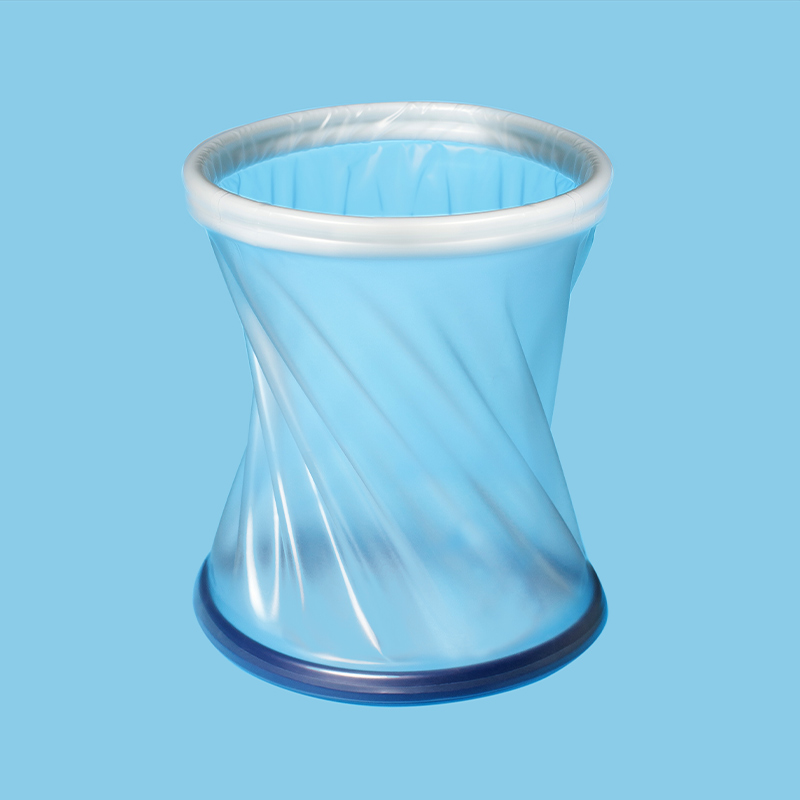
Disposable Wound Protector (Flexible Ring)
Soft flexible ring in six sizes from XX-Small to X-Large, with sheath lengths of 110 to 340 mm and published incision ranges of 10 to 170 mm.
View Product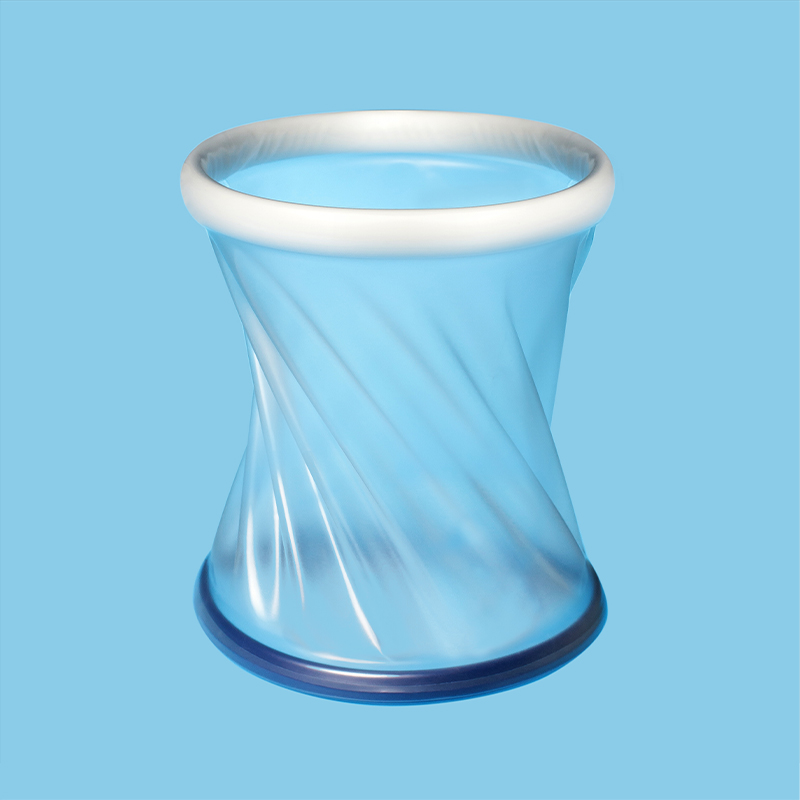
Disposable Wound Protector (Rigid Ring)
Firm rigid ring in five sizes from Small to XX-Large, with sheath lengths of 180 to 360 mm and published incision ranges of 25 to 250 mm.
View ProductFit and Ease of Use
Placement and removal
Placement speed affects workflow. A flexible ring rolls into the opening with modest effort, and removal follows the same path in reverse. Teams should confirm that the chosen size seats without forcing the tissue. A proper fit means the ring sits snug against the wound walls from the first pass.
Stability during retraction
Stability under load separates designs. A circumferential wound retractor spreads force around the opening, and even distribution supports steady exposure. A loose ring shifts during retraction and weakens the wound edge barrier. Clinicians should test retention against the expected pull of the case.
Compliance and Cost
Sterility and labeling
Compliance checks belong before any order. Buyers should verify a validated sterilization process, sterile packaging, and clear labeling. Documentation support and supply stability also count as supplier capabilities. National guidance on surgical site infection prevention sets out the aseptic and decontamination expectations behind those checks. These items protect the facility and the patient alike.
Per-unit cost versus needs
Cost deserves a balanced view. A lower per-unit price means little if the device lacks the sheath length or ring retention a procedure demands. Teams should weigh price against procedure needs, not choose on price alone. The right wound protector for a complex case may cost more, and that difference buys reliability.
Selecting among wound protectors comes down to matching design to demand. A disposable plastic wound edge barrier that suits a short case may fall short in a long one. Each criterion above helps a team reach a sound decision.
Check Specifications Against Your Incision Range
Ring dimensions, sheath lengths, and sterile packaging details are listed by reference number for both the flexible-ring and rigid-ring ranges.
Step 5: Avoid Common Sizing Pitfalls
Measurement Mistakes
Relaxed versus retracted incision
A relaxed incision gives one reading, and a retracted incision gives another. Tissue stretches once the surgeon applies traction, so the opening grows wider than the original note. A team that measures early and then uses that number after retraction will pick an undersized device. The ring will not seat against the wound walls, and the barrier will sit loose.
The fix is simple. Re-measure after retraction and treat the new figure as the working value. The wound length recorded on the ward serves as a starting point, not a final answer.
Rounding down instead of up
Rounding down is a frequent error. A measured value of 9.2 cm sits just above a range boundary, and a clinician may round to 9 cm to stay inside the smaller bracket. That habit pushes the choice toward a device that barely covers the opening. Rounding up keeps a margin of coverage and leaves room for tissue relaxation.
Chart and Product Misreads
Confusing incision size with device size
Charts list two numbers, and readers often swap them. The incision size describes the opening the device serves. The device size describes the ring the surgeon handles. A clinician who orders by ring diameter alone may receive a product built for a different opening. Reading the range column first prevents this mix-up.
Overlooking sheath length
Sheath length matters most in deep wounds. A device with generous coverage but a short sheath will not reach through a thick abdominal wall. The ring cannot anchor, and the seal fails. Teams should check the height column against the measured depth before the case begins.
Habit-Based Errors
One size for all procedures
Defaulting to a single size across every case undermines fit. A device that suits a short laparoscopic extraction will fall short in a long open operation. Habit replaces judgment, and the wound protector stops matching the job.
Ignoring procedure-specific needs
The type of surgery shapes what the field demands. Contaminated cases need a tight seal at the margin. Long cases need steady ring retention. A clinician who skips these factors may choose a wound-edge protector that protects poorly. Matching the right wound protector to the procedure, the measured opening, and the expected load keeps fit and protection aligned. Teams that review wound protectors against each case avoid these traps.
Five steps anchor a sound decision. Clinicians measure the incision at its widest point, read the sizing chart against that number, weigh procedure type and contamination risk, compare designs on performance and fit, and treat habit as a source of error rather than a shortcut. Correct sizing supports wound-edge protection, reliable retraction, and compliance and cost goals. Teams that follow this sequence open a device that matches the opening they have, rather than the opening they expected.
Match a Wound Protector to the Procedure, Not to Habit
Sizing data, sheath-length options, and single-use packaging details can be reviewed before the case is added to the schedule.
FAQ
A sterile ruler or tape gives the most reliable reading. The surgeon measures across the widest point of the opening. Curved or irregular incisions may need separate length and width values. The team records the number before surgery and confirms it again in the operating room.
A loose ring shifts during retraction and weakens the seal at the wound margin. An undersized device restricts access and limits exposure. Either mismatch reduces the protection a wound edge protector can offer. Matching the measured opening to the published range prevents both problems.
No. A device that suits a short laparoscopic extraction will fall short in a long open operation. Procedure type, duration, and contamination risk all shape the choice. Defaulting to a single size replaces judgment with habit and undermines fit.
Sheath length must suit the depth of the opening. A device with generous coverage but a short sheath will not reach through a thick abdominal wall. The ring cannot anchor, and the seal fails. Teams should check the height column against measured depth.
The chart lists an incision range and a device diameter. These are different figures. Clinicians should read the range column first and treat the diameter as a secondary check. Ordering by the reference number tied to the published range avoids mix-ups across manufacturers.
Size up when the measured value sits near the top of a range, when tissue may relax further, or when the case demands greater retraction. Rounding up keeps a margin of coverage. Rounding down pushes the choice toward a device that barely covers the opening.
Yes. Pediatric cases involve small openings, so a compact device with a short sheath is usually the better match. Bariatric cases present a thick abdominal wall, and ring retention plus sheath length become the deciding factors. Neither design should be chosen solely because of the surgical specialty.
Buyers should confirm a validated sterilization process, sterile packaging, and clear labeling. Documentation support and supply stability also count. For cost, teams should weigh per-unit price against procedure needs rather than choosing on price alone. A dependable wound-edge protector balances performance and compliance.
References and Notes
Dual-ring plastic wound protector versus surgical gauze in open gastrointestinal surgery — multicentre randomised trial reporting surgical site infection rates of 10.9% and 20.5% (JAMA Surgery, 2024; PMC11044008; accessed 2026-11-06)
Systematic review of wound edge protector devices in abdominal surgery — source of the pooled odds ratios quoted in Step 3 (Updates in Surgery, 2017; accessed 2026-11-06)
Guidance on the prevention and treatment of surgical site infections — aseptic and decontamination expectations referenced in Step 4 (NICE guideline NG125; accessed 2026-11-06)
Data notes: the incision ranges in Step 2 are illustrative examples, not brand recommendations. The dimensional table reproduces published ring, channel, and height values for single-ring (QKA) and dual-ring (QKB) configurations and is included to show the spread between models; it is not a product recommendation. Product sizes and sheath lengths in the cards are taken from the manufacturer's published reference list.
Internal links: every original in-text link to segimedical.com is retained. One link that pointed to an unrelated page, and two outbound links to other device manufacturers, were replaced with pages and sources that match the anchor text.