molly@surgitoolssh.com



How Does a Disposable Wound Protector Help Reduce Surgical Site Infections
 Nov 16, 2026|
 View:8
A disposable wound protector reduces surgical site infections by holding a continuous physical barrier between the wound edge and the contaminated surgical field. It changes the geometry of an open incision rather than the chemistry of the case, which is why it sits alongside antibiotics, skin preparation and sterile technique instead of replacing any of them.

Key Takeaways
A disposable wound protector creates a physical barrier between the wound edge and contaminated fluids.
The device isolates the incision rim and blocks bacteria from reaching deep tissue.
It reduces mechanical trauma by spreading retraction force evenly around the incision.
Pooled trial data shows a lower surgical site infection rate with protector use, and the authors rate the certainty of that estimate as very low.
The strongest evidence sits in clean-contaminated abdominal surgery such as colorectal procedures.
The protector complements standard infection prevention protocols; it does not replace them.
Preventing one infection can offset the price of protectors across many cases, depending on local treatment costs.
Procurement teams should verify regulatory clearance, sterility documentation and quality certification before ordering.
Infection prevention works in layers, and each layer has to survive contact with a real operating list. A protector adds one single-use layer at the wound edge, deploys in seconds and does not ask the team to change its sterile routine. The pages for the disposable wound protector range list the stock references, sheath lengths and packaging behind that claim.
How a Disposable Wound Protector Works
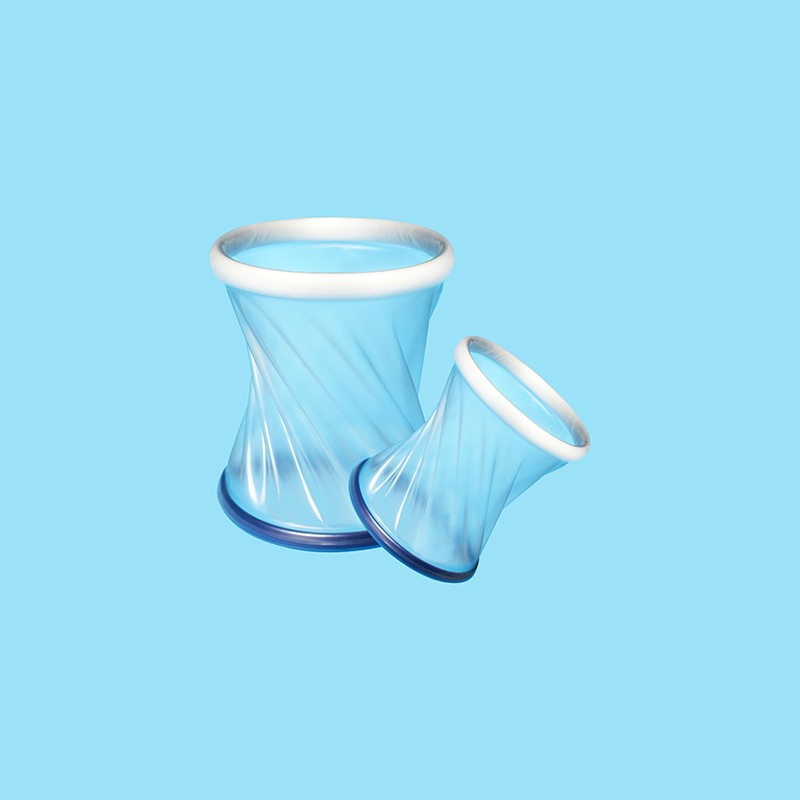
A wound protector changes the geometry of an open incision. The device unfolds into a cylinder. A rigid outer ring sits on the skin, and a flexible sleeve passes through the incision. An inner ring rests against the deep wound edge. The two ring designs differ mainly in how that inner ring is anchored, and the difference is set out in this comparison of single-ring and double-ring wound protectors.
This arrangement creates a 360° atraumatic retraction zone. The rigid ring holds the sleeve open and spreads retraction force evenly around the entire incision circumference. No single point of tissue bears the full load. Point loading is avoided, and the postoperative pain reported at the wound margin falls accordingly.
The sleeve also traps moisture at the incision site. A moist wound bed supports natural healing and keeps the margins clearly visible. Surgeons gain a cleaner view through small incisions, and instrument maneuverability improves, especially in laparoscopic work.
Isolating Wound Edges
Sealing the incision rim. The sleeve forms a tight, continuous seal against the cut edge of the skin and subcutaneous tissue. Every layer of the wound margin sits behind the protective film. The seal runs the full circumference with no gaps at the corners. Contaminated fluid from the surgical field cannot wick sideways into the wound edge. The barrier stays in place for the entire procedure. Removal takes seconds at the end of the case.
Shielding against contact. Retractors, instruments and gloved hands all contact the wound edge during a typical operation. Each contact carries bacteria from the field into the tissue. The protector interposes a sterile sleeve between the tissue and every object that enters the incision, so the edge is kept from direct contact with a contaminated instrument. The shield also protects the edge from spillage during irrigation and from contact with the operative field itself.
Blocking Bacterial Migration
Skin flora at the edge. Skin harbours resident flora in hair follicles and sweat glands. An incision cuts through these structures and exposes the flora to the deeper tissue. The protector covers the cut surface of the skin edge. Flora trapped in the follicles stay on the outside of the sleeve. They cannot migrate inward along the wound margin. This matters most in clean-contaminated cases, where the incision passes through a colonized area.
Containing the migration path. Bacteria move along surfaces. A wound edge offers a continuous path from the skin surface to the deep tissue. The sleeve breaks that path. Any organism that reaches the sleeve meets a smooth, non-absorbent surface. The organism cannot colonize the film or travel along it. The migration route ends at the barrier. The deep wound stays isolated from the surface flora for the duration of the case.
Reducing Mechanical Trauma
Limiting desiccation and abrasion. An open wound edge dries out under operating room lights. Dry tissue cracks, and cracked tissue admits bacteria more easily. The sleeve retains moisture at the incision site. The wound margin stays supple and intact. The film also reduces abrasion. Standard retractors drag across the edge with each adjustment. The sleeve absorbs that friction. Tissue damage from repeated instrument movement falls, and the wound edge keeps its structural integrity.
Less trauma, better defence. Traumatized tissue defends poorly against infection. Crushed or dried tissue has reduced blood flow and weaker immune response. The 360° retraction spreads force evenly and avoids crush injury at pressure points. Preserved perfusion supports the tissue's own defences. The body's first line of resistance stays intact at the wound margin. A well-perfused edge resists bacterial challenge far better than a damaged one. The mechanical benefit and the barrier benefit reinforce each other. Together they explain much of the infection reduction that clinical studies attribute to these devices, and the wider effect on workflow and recovery is described in this overview of how wound protectors support procedures and recovery.
Specifying a Protector for a Contaminated Case?
Request the size chart, sterility documentation and sample terms for the incision range your team actually opens.
Clinical Evidence and Effectiveness
Surgical teams want proof before they change a protocol. The clinical literature on wound protectors offers a reasonably consistent picture. It also has clear boundaries. This section reviews what the studies show, where the signal is strongest, and where the evidence stops short of firm conclusions.
What Studies Show
Infection rates with and without a protector. A pooled analysis of published trials examined wound protector use during abdominal surgery. The analysis found a significant reduction in the overall surgical site infection rate. The pooled risk ratio was 0.63, with a 95% confidence interval of 0.50 to 0.80. In plain terms, patients treated with a protector developed fewer infections than patients treated without one. The confidence interval stays below 1.0, so the result is statistically significant. The effect size is moderate rather than dramatic. A risk ratio of 0.63 means the protector group carried roughly two-thirds the infection risk of the control group. That margin matters at scale. A hospital performing hundreds of abdominal cases each year sees a meaningful drop in absolute infection counts.
The same review pooled 19 randomised trials covering 4,779 patients and graded the certainty of that estimate as very low. That grade is a caution about the strength of the underlying trials, not about the direction of the effect: subgroup results held up in colorectal and gastrointestinal surgery, and its authors concluded that protectors should not be used indiscriminately across all abdominal surgery and that more trials are needed in laparoscopic work.
Comparison with standard draping. Standard draping protects the skin surface around the incision. It does not shield the cut edge of the wound itself. A randomised clinical trial compared a plastic wound protector with surgical gauze for wound edge protection. The trial design matters here. Randomization removes selection bias and gives the comparison real weight. Gauze represents the conventional approach in many operating rooms. The trial therefore tests the device against actual practice, not against a placebo.
That trial randomised 458 patients across 13 hospitals and reported an infection rate of 10.9 percent in the protector arm against 20.5 percent with gauze, a relative reduction of 46.8 percent with a 95 percent confidence interval of 16.6 to 66.1 percent. Length of stay was similar in both arms, at 15.2 days against 15.3 days, so in that cohort the gain showed up as fewer infections rather than as fewer bed days. Results from this kind of head-to-head design carry more weight than observational data alone.
The comparison also highlights a practical point. The protector addresses the wound edge directly, while gauze and drapes work at the surface level.
Where Evidence Is Strongest
Clean-contaminated procedures. Lower gastrointestinal surgery shows a consistent association with decreased odds of infection when surgeons use a wound protector. This makes anatomical sense. Colorectal cases open a colonized lumen. The incision passes through a field rich in enteric organisms. The wound edge faces constant exposure during the case. A barrier at the edge blocks the most direct route of contamination. The pooled abdominal analysis supports this pattern. Clean-contaminated procedures form the core of the evidence base. Teams in colorectal and similar specialties can point to published data when they build a case for adoption.
High-risk settings. Some patient and procedure factors raise baseline infection risk. Long operations, heavy contamination and compromised immunity all push the odds upward. A relative risk reduction delivers more absolute benefit when the starting risk is high. A protector fits naturally into these settings. It adds a mechanical layer that does not depend on antibiotic timing or patient physiology. The device works the same way in every case. That consistency gives high-risk teams one more reliable control point.
Limits of the Evidence
Variation across specialties. Most published trials focus on abdominal and gastrointestinal surgery. Evidence for orthopedic, obstetric and trauma applications is thinner. Teams in those fields should read the data as supportive rather than definitive. Procedure mix, incision size and contamination patterns differ across specialties. A result from colorectal surgery does not automatically transfer to a hip replacement. Buyers and clinical committees should match the evidence to their own case mix. Where direct trial data is scarce, the mechanism and the abdominal evidence together provide reasonable support, but not proof.
A complement, not a replacement. A disposable wound protector does not replace antibiotics, sterile technique or proper skin preparation. The pooled analysis measures the device as an adjunct within standard protocols, and the trials evaluate it that way rather than as a standalone measure. National guidance on surgical site infection prevention sets out the wider bundle of measures, and the protector sits inside that bundle rather than above it. Infection prevention rests on multiple layers, and the protector adds one layer at the wound edge. Teams should present it that way to staff and to procurement. Overstating the device invites skepticism. Framing it as a complement keeps expectations accurate and supports sustained use.
Fit Across Surgical Procedures
Procedure type shapes how much a wound protector contributes. The device suits any incision where the wound edge faces contamination or repeated instrument contact. Three broad categories show where it fits most clearly.
Open Abdominal Surgery
Colorectal and hepatobiliary. Colorectal and hepatobiliary operations open a contaminated or colonized field. The incision edge sits directly in the path of spillage. A protector shields that edge for the full case. The rigid ring also helps here. It holds the sleeve open and gives the surgeon a stable opening for specimen removal. Large specimens pass through without dragging across raw tissue. Instrument access stays clear throughout the procedure.
Contaminated fields. Heavily contaminated cases raise the value of a physical barrier. The sleeve separates the wound edge from spilled bowel contents and irrigation fluid. Teams working in these fields gain one more control point that does not depend on technique alone. The device fits naturally into existing protocols for contaminated surgery.
Minimally Invasive Procedures
Extraction-site protection. Laparoscopic cases still need an extraction incision. The specimen leaves through a small opening, and that opening faces the same contamination risk as any open wound. A protector lines the extraction site before the specimen passes through. The wound edge stays shielded during removal. Setup takes little time, so the step adds minimal delay to the case. The device appears in both open and minimally invasive work, and how wound protectors are applied across surgical procedures is summarised separately.
Port-site contamination. Port sites face contamination during instrument exchange and specimen retrieval. A protector at the extraction port creates a barrier at the point of highest exposure. Improved visibility through small incisions also supports instrument maneuverability. Surgeons see the wound margins clearly and move instruments with greater control.
Matching a Protector to an Extraction Site?
Compare the flexible ring configurations against the incision sizes your list actually produces before the next purchase order.
Sizes and Specialty Use
Disposable Wound Protector Sizes and Fit
Five sizes run from Small to XX Large on the rigid ring line. They cover incision ranges from 25 mm to 250 mm: the small sheath is quoted for a 25 to 60 mm incision and the XX Large for 170 to 250 mm. That spread handles everything from a small port site to a wide abdominal opening. Setup is fast, and the ring seats once placed. The flexible ring line runs wider at the small end, from XX Small at 10 to 30 mm up to X Large, and several references are offered in a shorter brief sheath.
| Ring design | Sizes offered | Incision range | Where it suits |
|---|---|---|---|
| Rigid ring | Small to XX Large, five references | 25 to 250 mm | Wide abdominal openings, specimen removal, a stable opening for instrument access |
| Flexible ring | XX Small to X Large, with brief sheath lengths | 10 to 170 mm | Smaller incisions and port sites, rapid setup, minimal-access work |

Matching size to incision matters. An undersized device stretches the edge; an oversized one sits loosely. Teams should stock a range rather than a single size, and choosing a wound protector size for a given incision comes down to measuring the opening rather than estimating it from the procedure name.
The two stock families below show how the same mechanism is packaged for different openings.

Wound Protector, Rigid Ring
Rigid ring holds the sleeve open for a stable working opening, quoted from a 25 to 60 mm incision up to 170 to 250 mm.
View Product
Wound Protector, Flexible Ring
Soft ring adapts to the incision for rapid setup, quoted from a 10 to 30 mm opening up to 110 to 170 mm.
View ProductOrthopedic, Obstetric, and Trauma
Orthopedic, obstetric and trauma teams work with different incision patterns and contamination profiles. The device still fits where edge protection matters. Trauma cases often involve contaminated wounds and urgent setup, and the fast deployment helps there. Obstetric and orthopedic teams can use a protector wherever retraction and edge shielding both add value, which is why some departments stock protectors for caesarean sections as a standing item. Each specialty should match the device to its own case mix.
Regulatory Compliance and Quality
Infection control claims carry legal weight. Procurement teams therefore treat regulatory status as a gate, not a bonus. A disposable wound protector enters the sterile field, so regulators classify it as a medical device and hold it to device level controls.
Device Classification
How protectors are regulated. Most markets place wound protectors in a moderate-risk device class. Regulators require a defined intended use, a documented risk analysis and evidence of biocompatibility for patient contact. The classification drives everything downstream: labelling, sterility claims and post-market surveillance. The pathway and the controls attached to it are published in the device advice issued by the US regulator. A supplier that cannot state its device class clearly has not finished the regulatory work.
Valid clearance. Valid clearance means the paperwork matches the product on the shelf. A certificate covers a specific design, size range and manufacturing site. Buyers should check that the sizes they order fall inside the cleared scope. An expired or narrow clearance leaves the hospital exposed during an audit.
Manufacturing and Sterility
Sterility assurance and labelling. Sterility is a process claim, not a property of the plastic. Manufacturers validate the sterilization method and run microbial limit and sterility tests on finished units. The label must state the sterilization method, the lot number and the single-use status. A broken seal voids the claim, so packaging integrity deserves a look during incoming inspection.
Quality management certifications. A quality management system certificate signals that the factory documents its processes and audits them. ISO 13485:2016 is the medical-device standard for this system. CE marking shows the product meets European regulatory requirements. FDA clearance opens the US market. Each one tells a procurement team that an outside body has reviewed the supplier's controls. These certifications are common among established manufacturers, and buyers should read them as baseline evidence rather than a differentiator.
What Buyers Should Confirm
Documentation to request. A serious supplier will share a documentation packet on request. Ask for the quality certificate, the device clearance, a sample certificate of analysis and the sterilization validation summary. Confirm that the certificate holder name matches the invoice. Cross-check the cleared size range against the purchase order.
Traceability and shelf life. Every unit should carry a lot number that links back to production and sterilization records. Traceability supports recalls and complaint investigations. Shelf life should rest on real-time or accelerated stability data, and the label must show an expiry date. Buyers should confirm that delivered stock carries sufficient remaining shelf life for their turnover rate.
Cost-Effectiveness in Practice
Infection prevention budgets rarely grow. Procurement teams must therefore justify every consumable against the cost of the event it prevents. A surgical site infection carries a heavy price. Treatment adds antibiotics, dressing changes and extended care. The patient stays longer in the hospital. Some patients return after discharge with a readmission. Each of these events consumes resources that the original procedure did not budget for. A disposable wound protector costs a fraction of that burden. The economics rest on avoided events, not on the unit price alone.
Direct and Indirect Costs
Unit cost versus infection cost. The unit cost of a protector is visible on the purchase order. The cost of an infection is scattered across departments. Pharmacy bills for antibiotics. The ward bills for extra nursing hours. The laboratory bills for cultures. The theatre bills for a return to surgery in severe cases. Finance teams see these costs in separate ledgers, so the total rarely appears in one place. Depending on case volume and the local cost of treating an infection, one avoided event can offset the price of protectors for many cases. Hospitals that map the full cost of an infection usually find the comparison favours prevention. The unit price looks small once the team prices the alternative.
Length of stay and readmissions. An infected wound extends the hospital stay. Extra days occupy a bed that another patient needs. Readmissions carry penalties in some payment systems, so the financial hit continues after discharge. A protector that lowers infection risk therefore protects bed capacity and revenue at the same time. The benefit is hard to see case by case. It becomes clear across a service line over a year. Teams that track infection rates alongside length of stay can connect the device to the outcome it supports, and the randomised comparison above is a reminder that the bed-day saving is a service-level effect rather than a fixed saving inside a single trial arm.
When Economics Favour Adoption
High-volume, high-risk mix. Volume amplifies every effect. A hospital that performs many abdominal cases sees more infections in absolute terms, even at a modest rate. A relative risk reduction then prevents more events. High-risk cases add to the case. Long operations, heavy contamination and compromised patients all raise baseline risk. The same relative reduction prevents more infections when the starting risk is higher. Programs with a high-volume, high-risk mix gain the most from routine use. Smaller programs with low infection rates may see a thinner financial case, though the clinical argument still stands.
Budgeting for consumables. Consumable budgets work on forecasts. A department estimates case volume, multiplies by units per case, and sets a line item. A protector adds a predictable cost per procedure. That predictability helps planners. The device price is fixed and known in advance. Infection costs are variable and arrive without warning. Shifting spend from unpredictable events to a fixed consumable line makes the budget easier to manage. Buyers should model the protector cost against the historical infection cost for their own service mix.
Procurement Considerations
Price versus sterility assurance. Price matters, but sterility assurance protects the patient. A cheap device with a weak sterility record creates risk that no discount can offset. Procurement teams should weigh the two together. Ask the supplier for sterility validation data and microbial limit test results. Confirm the sterilization method and the packaging integrity controls. A quote that undercuts the market deserves extra scrutiny on these points. The lowest price is only a good deal when the quality documentation holds up.
Total value, not unit price. Total value includes more than the invoice. It covers reliable supply, consistent sizing, clear documentation and responsive support. A supplier who ships on time and answers technical questions saves the department time and trouble. A manufacturer who provides traceability and shelf-life data reduces audit risk. These factors rarely appear in a price comparison, yet they shape the true cost of ownership. The right choice balances price, quality evidence and supply reliability for the department's own needs.
A wound protector lowers surgical site infection risk through three mechanisms. It isolates the incision rim, blocks bacterial migration and reduces mechanical trauma to tissue. Pooled trial data supports this effect, and the device fits open, laparoscopic and specialty procedures alike.
The full picture stays balanced. Evidence is strongest in clean-contaminated abdominal surgery. Regulatory clearance and sterility documentation confirm quality. Cost analysis favours adoption in high-volume, high-risk programs. A buyer who reads the pooled estimate and the randomised comparison side by side gets the honest version of the claim: a moderate reduction in risk, graded with caution, inside a bundle of measures that still does the rest of the work.
Building the Procurement File for Your Next Order?
The specification pages list sheath lengths, incision ranges and packaging for each stock reference, so the order can be checked against the cleared scope line by line.
FAQ
Does a disposable wound protector eliminate surgical site infections?
No. The device lowers risk; it does not remove it. Pooled trial data shows a reduced infection rate with protector use, but the effect is moderate and the certainty behind the pooled figure is graded very low. The protector works as one layer within a broader prevention protocol that includes antibiotics, sterile technique and proper skin preparation.
How much does a wound protector reduce infection risk?
A pooled analysis of abdominal surgery trials reported a risk ratio of 0.63, with a 95% confidence interval of 0.50 to 0.80, across 19 randomised trials and 4,779 patients. The protector group carried roughly two-thirds the infection risk of the control group. Individual results vary by procedure and patient factors.
Which surgeries benefit most from a wound protector?
Clean-contaminated abdominal procedures show the strongest evidence, especially colorectal and lower gastrointestinal surgery. Contaminated fields, trauma cases and laparoscopic extraction sites also suit the device. Evidence for orthopedic and obstetric use is thinner, so teams there should treat the data as supportive.
What sizes are available, and how does a team choose?
The rigid ring line runs five sizes from Small to XX Large, covering incisions from 25 mm to 250 mm. The flexible ring line adds smaller references from XX Small at 10 to 30 mm, plus brief sheath lengths. Teams should match the ring to the incision: an undersized device stretches the wound edge, and an oversized one sits loosely. Stocking a range rather than a single size serves a mixed case load better.
Does the protector replace antibiotics or standard draping?
No. The device complements existing protocols. Standard draping covers the skin surface, and the protector shields the cut wound edge itself. Antibiotics address systemic risk, and the barrier addresses local contamination. Published trials present the device as part of a bundle rather than as a standalone measure.
What documentation should a procurement team request?
Ask for the quality management system certificate, the device clearance, a sample certificate of analysis and the sterilization validation summary. Confirm the certificate holder matches the invoice and the cleared size range covers the order. Check lot traceability and remaining shelf life on delivery.
How does a hospital justify the cost?
The case rests on avoided infections, not unit price. An infection adds antibiotics, extra nursing, longer stays and possible readmissions. A single prevented event often offsets the cost of protectors across many cases. High-volume, high-risk programs see the strongest financial case.
Is the device sterile and single-use?
Yes. Manufacturers sterilize each unit and validate the process, then run microbial limit and sterility tests on finished units. The label states the sterilization method, lot number and single-use status. A broken seal voids the sterility claim, so check packaging integrity on arrival.
References and Notes
Meta-analysis of randomised trials on wound protectors in abdominal surgery — source of the pooled risk ratio 0.63, its 95 percent confidence interval, the 19 trials and 4,779 patients, and the very low certainty grading (pmc.ncbi.nlm.nih.gov, accessed 2026-11-16).
Multicentre randomised trial comparing a plastic wound protector with surgical gauze — source of the 10.9 percent versus 20.5 percent infection rates, the 46.8 percent relative reduction and the length-of-stay figures (pmc.ncbi.nlm.nih.gov, accessed 2026-11-16).
Guidance on the prevention and treatment of surgical site infections — context for the wider prevention bundle that the device sits inside (nice.org.uk, accessed 2026-11-16).
Regulatory advice for medical devices — reference for device classification, clearance scope and post-market controls (fda.gov, accessed 2026-11-16).
Data notes: the pooled figure and its certainty grading come from one meta-analysis and should not be read as a promise for a specific service; size references, sheath lengths and packaging are taken from the manufacturer's published product pages, and other product lines cover different ranges, so confirm against the current catalogue before ordering.
Data notes: cost statements in this article are described as orders of magnitude. Actual treatment costs, readmission penalties and bed-day values vary by health system and should be modelled on local figures. Two original illustrations carried rendered charts of infection rates and cost savings that could not be traced to any published study; they were replaced with product photography.