molly@surgitoolssh.com



Why Operating Teams Choose Single-Use Wound Protectors Over Reusable Retractors
 Nov 10, 2026|
 View:4
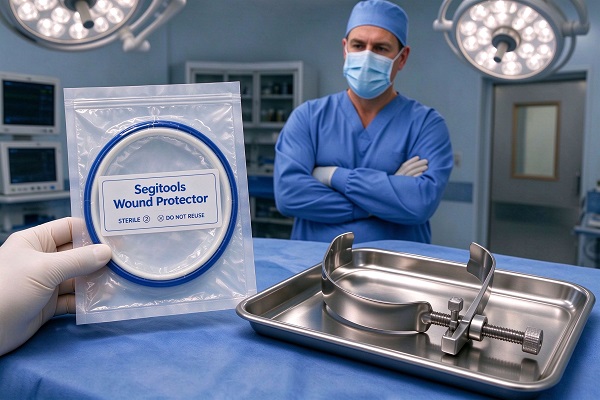
At the incision site, operating teams face a concrete choice: a single-use wound protector or a reusable retractor. Each option shapes patient safety, theater flow and the budget in different ways.
Three claims drive most decisions. Teams cite reduced cross-contamination risk, streamlined workflow and lower total cost of ownership. This comparison tests each claim against technical performance, application fit, regulatory compliance and cost.
The answer is scenario-based, not absolute. Wound protectors come in single-use and reusable forms, and both have a place. A disposable wound protector often suits high-turnover or contamination-sensitive surgery. Reusable retractors remain sound for predictable caseloads with strong reprocessing. Matching the device to the procedure, caseload and facility constraints is what makes a choice safer, time saving and cost-efficient.
Key Takeaways
Single-use wound protectors lower infection risk because each device arrives sterile and sealed.
Disposable protectors speed up surgery turnover by removing cleaning and sterilization steps.
Reusable retractors work well for predictable caseloads with strong reprocessing systems.
Hidden reprocessing costs for reusable tools add $15 to $30 per use.
Match the device to the procedure: single-use for high-volume or contaminated cases, reusable for complex precision work.
A mixed formulary lets hospitals use both device types where each performs well.
Request sterility validation and certification documents from suppliers before buying.
Calculate total cost per case across different caseloads so options are compared on a like-for-like basis.
Single-Use vs Reusable Medical Devices: The Core Decision
What Each Device Does
Barrier Protection vs Mechanical Retraction
A wound protector creates a physical barrier between the wound edge and the surrounding environment. The device holds soft tissue open while sealing the incision margin from contact with instruments, gloves and debris. This barrier function sits at the center of any comparison of wound protector types, and it is the mechanism described in intraoperative infection-control guidance on surgical site infection prevention in abdominal surgery.
A reusable retractor works differently. It applies mechanical force to hold tissue aside and open the surgical field. Stainless steel retractors offer strength and durability across many procedures. The two categories solve different problems, and each earns its place in the operating room.
Where the Categories Overlap
Wound protectors are available in both single-use and reusable forms, which gives hospitals flexibility. A reusable protector combines barrier protection with repeated use. A single-use protector delivers the same barrier function with no reprocessing step. Many teams use both categories side by side, selecting the device that fits the case at hand.
Three Selection Criteria
Outcomes, Efficiency, and Safety
Clinical outcomes come first. Teams weigh cross-contamination risk, tissue trauma and visibility of the wound margin. Efficiency follows: setup time, turnover speed and staff workload all shape the decision. Safety covers both the patient and the surgical team.
Regulatory Burden and Total Cost
Regulatory burden differs sharply between the categories. Reusable medical devices require validated cleaning and sterilization cycles, plus lifecycle tracking. Single-use medical devices arrive sterile and sealed, which simplifies documentation. Total cost includes purchase price, reprocessing labor, utilities and replacement cycles. A fair single-use vs reusable medical devices: pros and cons review must count every one of these factors.
Why the Choice Matters Now
Rising Infection-Prevention Expectations
Infection control expectations keep rising. Regulatory guidance from public health bodies and accreditation standards tighten around cleaning validation, documentation and device design. In the European Union, the MDR framework raised expectations for traceability and usability. Site surveys in the United States and elsewhere examine reprocessing steps closely and demand proof that every stage is validated.
Validation should bracket the device at its most challenging reprocessing state, typically the maximum labeled number of reuses.
Lumens, channels and crevices are the hardest features to clean and the most common root cause of reprocessing failures.
Material compatibility with repeated exposure to cleaning chemistries and sterilization methods must be demonstrated across the full reprocessing life.
Reprocessing Capacity Pressure
Staffing shortages and reprocessing backlogs pushed many hospitals toward targeted single-use adoption by procedure type. Every reusable instrument consumes water, energy, detergents, sterilants, staff time and equipment maintenance. Single-use and disposable formats remove that load from sterile processing entirely. For high-volume abdominal surgery lists, that relief matters. The same logic applies across abdominal surgeries where turnover speed and cross-contamination control both count.
Comparing Single-Use and Reusable Options for Your Lists?
Size ranges, barrier specifications and certification documents can be reviewed before a formulary decision is made.
Technical Performance of Wound Protectors
Barrier and Cross-Contamination
Sterile Single-Use Barrier
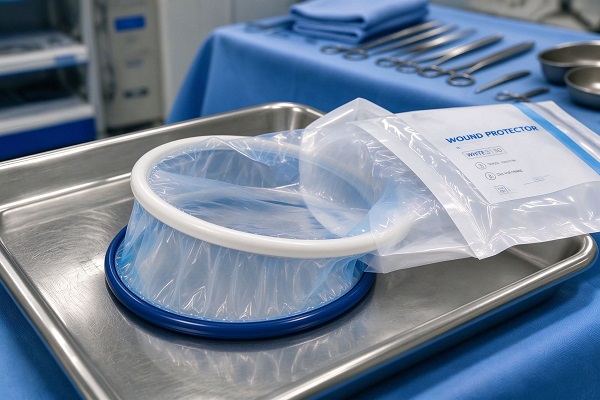
A sterile, sealed barrier sits at the heart of single-use wound protectors. An impervious plastic sleeve stops both endogenous and exogenous pathogens from embedding in skin, fat, fascia and peritoneum. That mechanism, combined with maintained wound humidity and reduced direct trauma from fixed retractors, is associated with a lower risk of surgical site infection.
A 2025 meta-analysis of 19 randomized trials covering 4,779 patients found that wound protectors reduced the surgical site infection rate in abdominal surgery (relative risk 0.63, 95% confidence interval 0.50 to 0.80). The largest reductions appeared in gastrointestinal and colorectal procedures, while other abdominal procedures showed no clear effect. The authors rated the certainty of evidence as low to very low and concluded that protectors should not be used indiscriminately.
A wound protector is a surgical device comprising a non-adhesive plastic sheath attached to a single or double rubber ring that secures the sheath to the wound edges. WHO suggests considering its use in clean-contaminated, contaminated and dirty abdominal procedures for the purpose of reducing the rate of surgical site infection.
Paraphrased from the WHO global guidelines for the prevention of surgical site infection, second edition (2018): a conditional recommendation based on very low certainty evidence.
Single-use medical devices arrive sterile and sealed, so the barrier is intact at the moment of use. Disposable sleeves and adapters maximize sterility and cut cross-contamination risk, and infection-control expectations drive demand for them in high-volume theaters.
Reprocessing Limits of Reusables
Reusable medical devices depend on validated cleaning and sterilization cycles. Every cycle carries residual risk at lumens, channels and crevices. Flexible ring wound protectors avoid that step entirely because they are discarded after one case. Reusable wound edge protectors still serve many units well, yet their barrier quality depends on reprocessing discipline rather than factory sterility.
Tissue Trauma and Wound-Edge Protection
Atraumatic 360° Retraction
The rigid-ring design spreads force evenly around the incision. Even distribution minimizes localized tissue trauma and associated pain. Circumferential 360° retraction reduces the need for frequent repositioning of hand-held instruments and frees an assistant for dissection. Elastic systems that spread tension across multiple points further reduce localized pressure on tissue edges.
Ischemia and Necrosis Risk
Prolonged pressure from sharp-edged instruments, including hand-held skin hook retractors, can cause bruising, tissue ischemia or necrosis. Soft wound retractors distribute tension more evenly, which helps preserve microcirculation and lowers the risk of necrosis and postoperative pain compared with traditional metal retractors.
| Feature | Soft Wound Retractor | Traditional Metal Retractors |
|---|---|---|
| Tissue trauma | Minimal; uniform pressure | Higher; bruising and ischemia risk |
Visibility and Surgical Field Access
Exposure Through Small Incisions
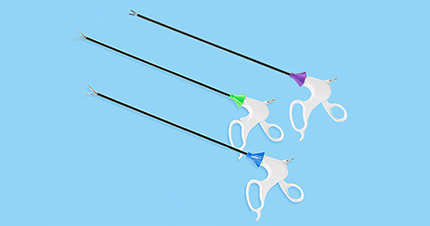
An appropriately sized wound protector maintains exposure without stacking multiple retractors around a limited incision. A transparent design widens the operative field and allows clear visualization of the wound. In a retrospective study of costal cartilage harvest for auricular reconstruction, using a lap-protector allowed a shorter donor-site incision (3.61 ± 0.29 cm versus 5.43 ± 0.44 cm), with lower postoperative pain scores and better scar quality. Single-use wound protectors therefore deliver more controlled incision retraction in minimally invasive and laparoscopic work. Reusable instruments remain appropriate for complex, precision-heavy surgery where rigid strength matters. Teams reviewing the rest of the laparoscopic set can compare the main grasper types and their applications.
Moisture Retention and Margin Visibility
The sealed sleeve retains moisture at the incision site and supports natural healing. Clear visibility of wound margins helps the surgeon judge tissue condition and place sutures with precision. These wound edge protectors combine a barrier, retraction and visibility in one device, which explains their growing role in abdominal surgery.
Application Fit and Workflow
Ease of Use and Learning Curve
Insertion and Seating
A surgeon seats a wound protector by folding the inner ring, guiding it through the incision and letting it spring open against the peritoneal surface. The outer ring then rolls the sheath down until the sleeve sits snug against the wound edge. The motion takes seconds and demands little force. Teams report a short learning curve because the device gives direct tactile feedback during seating.
Familiarity of Reusable Sets
Reusable sets carry decades of familiarity. Scrub teams know every component, and tray layouts rarely change. That comfort has real value in complex, precision-heavy surgery, where rigid strength and stable clamping matter more than speed. Many departments therefore keep reusable instruments on the shelf alongside wound protectors and choose per case.
Single-Use Setup and Turnaround
Time-to-Incision in High-Volume Lists
High-turnover outpatient settings favor single-use options for efficiency and infection control. A sterile device arrives ready to open, so setup shrinks to unpacking and seating. Plastic-composite and disposable models reduce processing time and equipment downtime. That gain compounds across a full list of short cases.
Sterile Processing Dependencies
Reusable medical devices depend on sterile processing capacity. Every tray must move through decontamination, assembly, sterilization and return before the next case. Digital tracking systems enforce that cycle and block re-issue until reprocessing finishes. Single-use medical devices bypass the queue entirely, which protects schedule stability when reprocessing backs up.
Versatility Across Case Mix
Open, Laparoscopic, and Contaminated Cases
The disposable wound protector (rigid ring) comes in multiple sizes, from Small to XX Large, with varying sheath lengths and incision ranges. That range covers open abdominal surgery, laparoscopic surgery and contaminated cases where a fresh sterile barrier matters most. Flexible ring wound protectors serve similar roles in units that prefer a softer seat.
The two single-use formats that cover most abdominal lists are listed below.

Disposable Wound Protector (Rigid Ring)
Soft-tissue and thoracic retraction with 360° atraumatic exposure, sized from Small to XX Large for open and laparoscopic abdominal surgery.
View Product
Disposable Wound Protector (Flexible Ring)
A softer ring format for units that prefer a flexible seat, with the same single-use barrier and specimen access.
View ProductMatching Device to Procedure
Device selection follows the procedure, not a blanket rule. Single-use wound protectors suit high-turnover lists and contamination-sensitive work. Reusable tools remain preferred for complex, precision-heavy surgery. A mixed formulary lets teams match each wound edge protectors choice to the case, and regular review of operating room data keeps that match accurate.
Need Both Formats on the Shelf?
Single-use protectors and reusable retractors can be reviewed side by side against the same case mix.
Regulatory Compliance and Infection Control
Validation and Sterility Assurance
Single-Use Sterility Documentation
Single-use medical devices leave the factory sterile, sealed and labeled for one procedure. That model removes reprocessing validation from the hospital entirely. Buyers should still verify the paperwork before any purchase order. Suppliers can be asked for the technical data sheet, material information, packaging configuration, sterility statement, shelf life, batch traceability process, inspection standards and applicable regulatory documents for the exact model under review.
CE marking, ISO 13485:2016 certification and FDA registration
Microbial limit and sterility testing records
A written quality agreement covering labeling, claims and post-market duties
Reprocessing Validation for Reusables
Reusable medical devices carry a different burden. Validation testing must prove both cleaning effectiveness and the sterilization steps needed to reach a satisfactory sterility assurance level. Hinged or multi-part retractors often need specialized cleaning techniques so no surface is missed. Manufacturers must show that their written instructions are realistic for hospital staff to follow. Weak protocols leave contaminants behind and raise cross-contamination risk.
Traceability and Documentation
Lot Tracking and Recall Readiness
Lot numbers link each wound protector to its sterilization batch. A recall then becomes a targeted action rather than a ward-wide sweep. Single-use medical devices simplify this step because one lot covers one sterile run.
Audit and Survey Preparedness
Surveyors ask for proof, not promises. A file holding certificates, sterility records and lot logs answers most questions on the spot. Teams that run wound protectors through cleaning, disinfecting and sterilization cycles must also show validated cycle records and lifecycle tracking.
Aligning With Infection Control Standards
Policy and Accreditation Expectations
Accreditation bodies expect documented device selection logic. Written policy should state which cases use a disposable barrier and which use reusable instruments. That clarity supports infection control reviews and protects staff during inspection.
Where Each Option Fits
Both categories meet the standards when matched to the setting. Single-use wound protectors suit high-volume abdominal surgery and contaminated cases, where a fresh sterile barrier lowers surgical site infection risk. Reusable retractors fit predictable caseloads with validated reprocessing and strong tracking. Neither choice creates an inherent risk to patient safety; poor validation does. A mixed formulary, reviewed against audit data, keeps patient safety risk low across every surgery list.
Cost and Total Cost of Ownership
Upfront Costs
Per-Case Purchase Price
The purchase price of a wound protector looks simple on a quote sheet. A buyer sees one figure per unit and compares it with the sticker price of a reusable retractor. That comparison misleads. A single-use device carries its full cost in that one line. A reusable instrument spreads its cost across many cases, yet it also carries costs that rarely appear on the invoice.
Capital Investment in Reusable Sets
Reusable sets demand capital upfront. A department buys trays, instruments and containers, then funds the sterile processing infrastructure behind them. That investment buys durability and familiar handling. It also commits the unit to a long maintenance path. Neither model is cheaper by default. The honest comparison counts every cost across the full life of the device.
Hidden Reprocessing Costs
Labor, Utilities, and Sterilization Consumables
Reprocessing carries real costs that rarely reach the purchasing spreadsheet. Published estimates differ mainly because the accounting boundary differs. Micro-costing work that counts instrument maintenance and sterilization alone reports roughly $0.51 to $0.77 per instrument, as shown in a study of operating room costs and instrument reprocessing. Analyses that add sterile processing labor, chemicals, utilities, quality control and equipment depreciation reach $15 to $30 per use. The table below follows that broader per-use convention.
| Cost Category | Figure |
|---|---|
| Reprocessing cost per use (labor, chemicals, utilities, quality control, equipment depreciation) | $15–$30 per use |
| Annual reprocessing cost for a retractor sterilized 200 times per year | $3,000–$6,000 |
The same burden breaks into smaller parts in a per-tray costing: enzymatic detergent, ultrasonic cavitation, sterile barrier pouches, autoclave electricity and water, technician labor and periodic sharpening. These hidden reprocessing costs accumulate with every case.
Maintenance and Replacement Cycles
Reusable instruments degrade gradually over their life cycle. Edges dull, joints loosen and performance declines with each pass through the sterilizer. That decline is a lifecycle cost factor, not a flaw in the category. A department must budget for sharpening, repair and eventual replacement. Single-use medical devices offer consistent performance from the first case to the last because each unit arrives new. That consistency simplifies forecasting and removes surprise repair bills from the budget.
Wound Protector Cost Per Case
Total Cost Across Caseloads
Cost per case changes with volume. A low-volume unit may find reusable sets economical because reprocessing runs infrequently. A high-volume list shifts the math, since every case adds another reprocessing cycle, another pouch and another share of technician time. Teams should calculate cost per case as total annual spend divided by annual case count, counting purchase price, reprocessing labor, consumables, utilities and replacement. Run that calculation at several caseload levels. The crossover point where one option overtakes the other often surprises buyers.
Procurement Questions for Suppliers
A strong request for quotation settles the cost question before any contract. Buyers should request a detailed itemized quotation covering unit cost, taxes and fees, and ask about volume-based or early-payment discounts. Confirmation should also cover whether shipping, packaging or handling costs are included, which costs recur versus which are one-time, what assumptions shaped the pricing, how long the price stays valid, and what additional charges may apply under specific conditions. Suppliers should attach compliance certificates, product datasheets, warranty terms, pricing sheets, insurance documents and references. Those documents let procurement teams validate credibility and minimize risk. For wound protectors, add three questions: sterility validation records, per-case pricing at the expected volume, and the full size range available. A supplier that answers all three in writing makes the comparison far easier.
Scenario Fit and Device Selection
When a Disposable Wound Protector Fits Well
High-Volume, Fast-Turnaround Lists
Busy day-surgery lists reward speed at every step. A disposable wound protector arrives sterile and seats in seconds, so the team moves from opening to incision without waiting on tray returns. Hospitals and ambulatory surgical centers increasingly stock single-use wound protector systems for these lists. Plastic wound protectors dominate in this segment because they are lightweight, flexible and cost-effective in minimally invasive and abdominal surgery. These wound protectors also ease specimen removal and instrument access, which keeps short cases moving.
Contaminated or Infection-Sensitive Cases
Contamination control decides device choice in dirty and infected fields. Single-use medical devices remove the reprocessing chain between patients because each unit is sterile for one procedure. Plastic wound protectors also play a role in laparoscopic work, where they maintain pneumoperitoneum integrity and protect port sites, and in open abdominal and perineal surgery, where they shield the wound edge in larger incisions. Obstetric and gynecologic teams use wound protectors for infection prevention in pelvic and cesarean-related procedures. Silicone and polymer wound protectors draw interest in these settings because 360° circumferential retraction limits tissue damage at the wound edge.
When Reusable Retractors Fit Well
Predictable Caseloads With Strong Reprocessing
Reusable medical devices reward units with steady, forecastable lists and validated processing cycles. Reusable wound retractors remain competitive on cost-effectiveness and durability in high-volume surgical settings. Hospitals and large facilities favor reusable self-retaining retractors for complex orthopedic, abdominal and cardiovascular procedures, where long-term instrument use pays off economically. Strong reprocessing infrastructure turns that durability into savings.
Long-Term Instrument Infrastructure
Departments with established trays, tracking systems and trained sterile processing staff already carry the fixed costs of reusable instruments. Reusable medical devices fit that infrastructure well. Stainless steel and titanium tools withstand repeated sterilization cycles, and teams know every component. Reusable retractors suit longer or more complex surgery where rigid strength and durability matter most.
Building a Mixed Formulary
Segmenting by Procedure and Risk
A mixed formulary matches each device to the case. Teams assign wound protectors to high-turnover lists and contamination-sensitive surgery, and keep reusable sets for precision-heavy work. Flexible ring wound protectors serve units that prefer a softer seat. This segmentation keeps both categories working where each performs well.
Reviewing Choices With OR Data
Formularies need periodic review. Operating room data shows turnover times, infection rates and reprocessing backlogs. Teams that review that data quarterly keep wound edge protectors and retractors aligned with actual caseloads. A wound edge protector that suits one service line may not suit another. Data turns that judgment into a documented, defensible policy.
The trade-offs stay clear. Single-use wound protectors lead on barrier protection, workflow speed and traceability. Reusable retractors remain a sound fit for predictable caseloads with robust reprocessing infrastructure. Any single-use vs reusable medical devices decision should follow the scenario, not a blanket rule.
Many operating teams choose single-use wound protectors for high-volume lists, contamination-sensitive cases and sites where reprocessing capacity is constrained. That preference reflects fit, not a claim that one option wins everywhere. Wound protectors in both formats keep a mixed formulary viable.
Teams evaluating suppliers should request sterility validation, certification documentation and per-case cost data before a formulary change. The questions above apply to any supplier, whatever format the list requires.
Reviewing Suppliers for a Wound Protector Contract?
Sterility records, lot traceability and per-case pricing can be compared in a single request.
FAQ
Do single-use wound protectors lower surgical site infection risk?
Evidence points in that direction, with limits. A 2025 meta-analysis of 19 randomized trials covering 4,779 patients found that wound protectors reduced the surgical site infection rate in abdominal surgery (relative risk 0.63, 95% confidence interval 0.50 to 0.80), with the largest reductions in gastrointestinal and colorectal procedures. The authors rated certainty as low to very low and advised against indiscriminate use, so the choice should follow wound class and case mix. A single-use protector keeps its barrier intact because each unit arrives sterile.
How do wound protectors differ from traditional retractors in tissue handling?
Traditional metal retractors apply concentrated pressure at contact points. Soft wound protectors spread tension around the incision, which lowers bruising, ischemia and necrosis risk at the wound edge. Many patients report less postoperative pain at the incision when a soft protector is used.
What does reprocessing really cost per reusable instrument?
Published estimates depend on the accounting boundary. Micro-costing work that counts instrument maintenance and sterilization alone reports roughly $0.51 to $0.77 per instrument, while per-use analyses that add sterile processing labor, chemicals, utilities, quality control and equipment depreciation reach $15 to $30 per use. Repair and replacement budgets sit outside both figures.
Which cases are a good match for a disposable wound protector?
Laparoscopic and open abdominal procedures fit well. High-volume, fast-turnaround lists reward the speed of a sterile device that needs no tray return, and contaminated or infection-sensitive cases benefit most from a fresh barrier for every patient. Wound protectors also ease specimen removal and instrument access in these settings.
When should a team keep reusable retractors?
Reusable retractors suit predictable caseloads with validated reprocessing and strong tracking systems. Complex, precision-heavy surgery often calls for rigid strength and stable clamping. Departments with established trays and trained sterile processing staff already carry the fixed costs, so durability pays off.
What documentation should buyers request from a supplier?
Ask for CE marking, ISO 13485:2016 certification and FDA registration. Request microbial limit and sterility testing records, plus lot traceability details. Confirm the full size range and per-case pricing at the expected volume. Written answers make supplier comparison far easier.
How does a team calculate cost per case?
Divide total annual spend by annual case count. Count purchase price, reprocessing labor, consumables, utilities and replacement. Run the calculation at several caseload levels to find the crossover point. Single-use protectors often change the math on high-volume lists.
Where can teams source a reliable disposable wound protector?
Buyers can verify sterility validation, certification documents and per-case cost data before ordering. Ring format, sheath length and size range differ between suppliers, so the specification for the exact model under review should be confirmed in writing against the intended caseload.
References and Notes
Meta-analysis of randomized trials on wound protectors and surgical site infection in abdominal surgery — infection rates, subgroup results and certainty ratings (ncbi.nlm.nih.gov, accessed 2026-11-10)
Position paper on intraoperative surgical site infection control and prevention — barrier function and intraoperative measures (ncbi.nlm.nih.gov, accessed 2026-11-10)
Retrospective study of a wound protector device in costal cartilage harvest — incision length, pain scores and scar quality (nature.com, accessed 2026-11-10)
Study of operating room costs and surgical instrument use — per-instrument sterilization and maintenance cost range (ncbi.nlm.nih.gov, accessed 2026-11-10)
Guideline note: the recommendation to consider a wound protector in clean-contaminated, contaminated and dirty abdominal surgery comes from the WHO global guidelines for the prevention of surgical site infection, second edition (2018), a conditional recommendation based on very low certainty evidence.
Data notes: the $15 to $30 per-use reprocessing figure includes sterile processing labor, chemicals, utilities, quality control and equipment depreciation; per-instrument sterilization-only estimates are lower because the accounting boundary differs. Cost per case varies with caseload, contract pricing and local labor rates. Product specifications quoted in the article follow the supplier's published product data.
Internal links: all original links to segimedical.com are retained; targets whose anchor text pointed to an unrelated article were reassigned to the article that matches the anchor.
Surgitools Medical Instruments Co., Ltd. — company profile (segimedical.com, accessed 2026-11-10)