
 molly@surgitoolssh.com



What is a skin retractor used for?
 Sep 14, 2026|
 View:1445
A skin retractor is one of the most common instruments on a surgical tray, yet its job is easy to underestimate: it holds the edges of a wound or incision apart so the surgeon can see and reach the operative area. From routine wound closure to complex joint replacement, retractors keep tissue out of the way while protecting the structures around the incision. This guide explains what a retractor is used for, how the main types work, and what buyers should check before stocking up.
Key Takeaways
A skin retractor pulls and holds skin, muscle, or soft tissue away from the surgical field, giving the surgeon clear visibility and room to work.
Retractors fall into two families: hand-held instruments such as hooks and rakes, and self-retaining devices that hold themselves open with a frame or elastic stays.
They are used across general, plastic, orthopedic, and trauma surgery, as well as in minor wound closure procedures.
Hook tips come in sharp and blunt versions; sharp hooks grip firmly while blunt hooks are gentler on delicate tissue.
Disposable sterile retractors remove the need for cleaning, sterilization, and reprocessing between patients, which simplifies logistics in busy operating rooms.
Choosing the right retractor means matching size, hook style, and single-use or reusable design to the procedure and the expected case volume.
What Is a Skin Retractor?
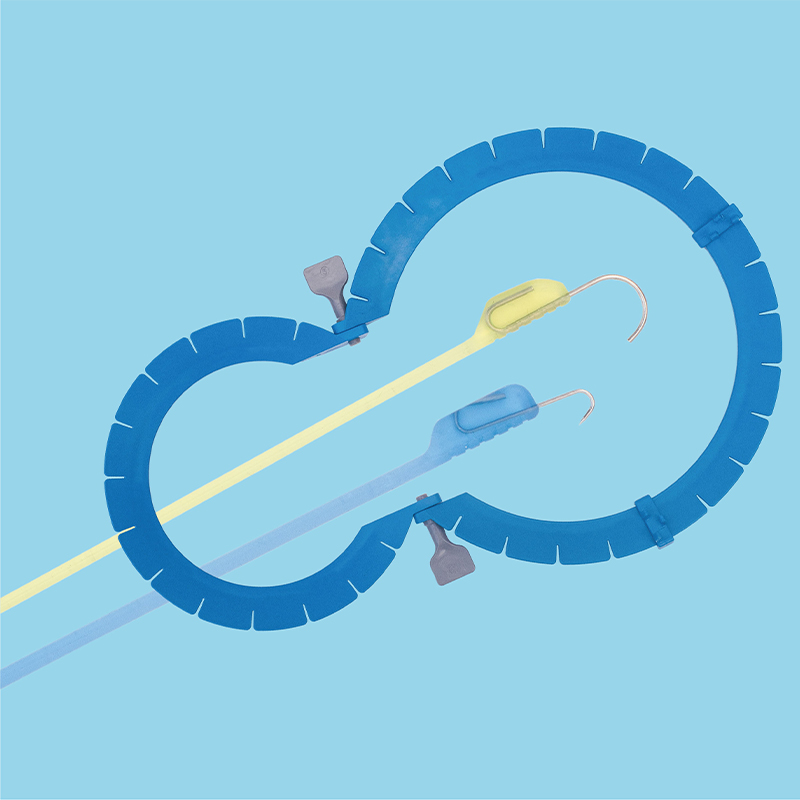
A skin retractor is a surgical instrument designed to hold back the edges of an incision or wound. In its simplest form it is a handle with one or more hooks at the tip; in its more advanced form it is a ring with elastic stays that surround the wound and hold it open without any hands. The common goal is the same: expand the surgical field of view, expose the target tissue, and keep surrounding structures — nerves, blood vessels, muscle, and skin — out of the working area.
Because retractors work directly on living tissue, their design balances two requirements. They must grip firmly enough to hold tissue in place, and they must do so with controlled force so the tissue is not bruised or torn. This is why hook geometry, ring size, and material matter more than they first appear to.

What Is a Skin Retractor Used For?
Retraction serves four basic purposes in every procedure where it is used:
Exposure: holding skin and muscle away from the surgical site so the surgeon can see and reach the target area.
Protection: keeping surrounding nerves, blood vessels, and organs away from instruments and from accidental injury.
Tension control: managing tissue tension along the incision, which helps wound edges align correctly during closure.
Hands-free working: self-retaining designs free up assistants, who can then perform other tasks or be redeployed.
| Specialty | Common Procedures | Why Retraction Is Needed |
|---|---|---|
| General surgery | Appendectomy, cholecystectomy, hernia repair | Exposes the abdominal wall and protects the organs under the incision |
| Breast surgery | Tumor resection, biopsy | Retracts breast tissue to reveal the lesion clearly for precise excision |
| Plastic surgery | Blepharoplasty, rhinoplasty, body contouring | Holds fine skin edges apart with minimal trauma to delicate facial tissue |
| Orthopedic surgery | Fracture reduction, joint replacement | Keeps skin and muscle away from the bone and protects nerves and vessels |
| Trauma and wound care | Laceration repair, wound debridement | Opens the wound for cleaning, inspection, and closure |
In abdominal surgery, for example, a retractor spreads the skin and muscle layers of the abdomen so the surgeon can enter the cavity and work accurately. In facial plastic surgery, smaller retractors hold fine skin edges apart so the surgeon can shape and adjust tissue with precision. In fracture reduction, retractors expose the fracture site while shielding the nerves and vessels that run beside the bone. The same logic applies to minor procedures: during wound debridement or skin graft preparation, retraction keeps the wound open, keeps it clean, and gives the surgeon a clear view of the tissue being treated. Across all of these cases the instrument does the same job: it converts a narrow incision into an open, accessible field.
Hand-Held vs Self-Retaining Skin Retractors
Retractors are usually divided into two operating modes. Hand-held retractors — single hooks, double hooks, and rake-style instruments — are held by a surgeon or assistant and adjusted continuously during the procedure. Self-retaining retractors lock into place with a frame, ring, or elastic stays and hold the wound open on their own. Peer-reviewed research on self-retaining retractors notes that they provide hands-free exposure, which lets surgeons use both hands for the actual procedure and often reduces the number of assistants needed at the table.
| Feature | Hand-Held Retractors | Self-Retaining Retractors |
|---|---|---|
| How they hold tissue | Held by the surgeon or an assistant | Frame, ring, or elastic stays hold it open |
| Adjustability | Continuous, manual adjustment | Set once, then re-adjusted as needed |
| Staff needed | One hand occupied during retraction | Hands free after placement |
| Typical designs | Skin hooks, rake retractors | Ring retractors with elastic stays |
| Best suited for | Small wounds, fine tissue, short procedures | Larger incisions and longer procedures |
Disposable vs Reusable Skin Retractors
Reusable metal retractors have served operating rooms for decades and remain standard in many hospitals. Disposable sterile retractors are a newer alternative: each unit is delivered sterile, used once, and discarded. Because no cleaning or sterilization step is needed between uses, single-use instruments remove a step from the reprocessing loop that, if done imperfectly, is associated with surgical site infections. Infection control guidance from the CDC describes the measures hospitals take to prevent surgical site infections, and the WHO patient safety resources list health care-associated infections among the leading sources of avoidable harm in surgery — both of which explain why sterile, single-use devices have become common in operating rooms.
| Factor | Reusable Metal Retractors | Disposable Sterile Retractors |
|---|---|---|
| Sterility | Requires cleaning and sterilization after every use | Delivered sterile, single use |
| Reprocessing | Washing, inspection, sterilization, tracking | None |
| Risk profile | Depends on reprocessing quality | No cross-patient reprocessing risk |
| Logistics | Inventory and turnaround of sterile sets | Simple storage, ready to open |
| Cost pattern | Higher upfront, per-use reprocessing costs | Per-unit cost, no reprocessing costs |
How a Skin Retractor Works in a Procedure
In a typical operation, the retractor is placed right after the incision is made. The steps are straightforward:
The surgeon makes the incision and opens the first tissue layer.
A hook or ring is placed at the wound edge, engaging the skin or subcutaneous tissue.
The tissue is lifted and pulled away from the field until the target area is exposed.
In a self-retaining system, elastic stays hook onto the ring and hold the wound open under consistent tension.
When the procedure is complete, the stays and ring are removed and the wound is closed.
The key design point in a disposable ring retractor is the elastic stay system. Each stay is a small strap with a hook on each end; one end grips the wound edge and the other clips onto the ring. Because the stays distribute the pull around the whole circumference of the wound, the opening stays stable and the tension stays even for the entire procedure — without anyone holding it.
Even tension is not only a matter of convenience. Tissue that is held under steady, evenly distributed tension is less likely to be bruised or overstretched than tissue pulled unevenly by hand, and a stable field means the surgeon does not have to stop to re-adjust. For longer procedures, this steady retraction also reduces strain on the surgical team, since no one has to hold the retractor for the whole operation. In practical terms, the ring is positioned over the wound, the stays are clipped into place one by one, and the surgeon can start working immediately.
Key Features to Look For
When evaluating a disposable skin retractor, buyers typically look at the following features. Disposable ring retractors with elastic stays are available in a range of ring sizes and hook configurations, so the exact dimensions can be matched to the intended procedures.
| Feature | What It Does | Typical Options |
|---|---|---|
| Hook tip style | Determines grip and gentleness on tissue | Sharp hooks (about 3–5 mm) for firm grip; blunt hooks (about 12 mm) for delicate tissue; two-bifurcate hooks for wider hold |
| Ring size | Matches the size of the incision | Small rings for minor wounds, larger rings for abdominal and joint surgery |
| Elastic stays | Hold the wound open with even tension | Multiple stays distributed around the ring |
| Material and construction | Affects strength and safety | Sterile medical-grade plastic; one-piece construction designed to prevent hook detachment |
| Packaging | Affects storage and sterility | Individually wrapped sterile units, boxes of 20 or more |
Hook dimensions are typical reference values; exact specifications should be confirmed with the supplier.
How to Choose the Right Skin Retractor
Selection starts with the procedure, not the catalog. The checklist below covers the points that matter most for hospitals, clinics, and distributors:
Procedure type: minor wound repair needs a small retractor; abdominal or joint surgery needs larger rings and more stays.
Tissue being retracted: sharp hooks hold firmly on skin, while blunt or bifurcate hooks are safer on fat, muscle, and delicate tissue.
Incision size: match the ring dimensions to the wound so the stays sit at the correct angle.
Sterility requirements: confirm the product is sterile and single-use if the facility relies on disposable kits.
Case volume: high-volume facilities usually compare per-unit pricing and packaging quantities.
Supply reliability: check stock availability, lead times, and whether the supplier can hold consistent quality across batches.
Safety and Handling Notes
Retractors should be used only by trained surgical staff; incorrect placement or excessive force can damage tissue.
Check the sterile package integrity before use and discard any unit whose packaging is damaged.
Single-use devices must not be reused or resterilized; each unit is intended for one patient and one procedure.
Confirm that the materials are compatible with the facility's requirements for medical-grade devices.
Looking for a Reliable Skin Retractor Manufacturer?
Segimed is a medical device manufacturer specializing in general surgery consumables. Its disposable skin retractor line includes ring retractors from about 14 cm to 32.5 cm, with sharp, blunt, and two-bifurcate hook options and elastic stays for consistent retraction. Each unit is sterile and single-use, individually packaged, and available in bulk packing for hospitals, clinics, and distributors. Buyers can contact Segimed directly for specifications, samples, and quotes.
Send Inquiry — Get a QuoteConclusion
A skin retractor turns a narrow incision into a clear, protected surgical field. Whether hand-held or self-retaining, reusable or disposable, the instrument does one essential job: it keeps tissue out of the way so the surgeon can work accurately while the structures around the wound stay safe. For facilities weighing logistics and infection control, disposable sterile retractors simplify the workflow, and matching ring size, hook style, and packaging to real case volumes is the practical way to control cost without compromising the field.
Frequently Asked Questions
What is a skin retractor used for in surgery?
It holds the edges of an incision or wound apart so the surgeon can see and reach the operative area, while protecting surrounding nerves, vessels, and tissue from injury.
What is the difference between hand-held and self-retaining retractors?
Hand-held retractors are held by the surgeon or an assistant; self-retaining retractors lock into place with a ring and elastic stays, freeing up hands during the procedure.
Are disposable skin retractors sterile?
Yes. Disposable retractors are delivered sterile and intended for single use, so no cleaning or sterilization is needed between patients.
Which procedures use a skin retractor?
Retractors are used in general, breast, plastic, and orthopedic surgery, as well as trauma and wound care — anywhere the surgeon needs clear access through an incision.
What sizes of disposable skin retractors are available?
Ring retractors typically range from about 14 cm to 32.5 cm. The right size depends on the incision and the tissue being retracted.
Where can buyers find a reliable skin retractor manufacturer?
Hospitals, clinics, and distributors usually buy directly from manufacturers for better control over pricing and supply. It is worth requesting specifications and samples before placing a bulk order. Segimed supplies sterile single-use retractors and accepts inquiries directly.